


New York hotels increasingly come with an org chart. The lobby belongs to a brand, the brand belongs to a group, the group belongs to a fund, and somewhere in that ascending structure the question of who actually cares about your pillow gets lost between quarterly reviews and ROI. Which is why the Walker Hotels are more appealing than their modest footprint suggests: two properties, one city, independently owned. In a city of flags, these are houses with owners, and you can feel the difference before you have finished checking in.
There is a further test for a hotel, refined over twenty years of staying in them professionally, and it is this: does the hotel belong to its neighbourhood, or is it merely parked in one? The Walkers pass this test in two neighbourhoods that could not be more different, and that contrast is one of the reasons to write about them together.
Walker Hotel Greenwich Village
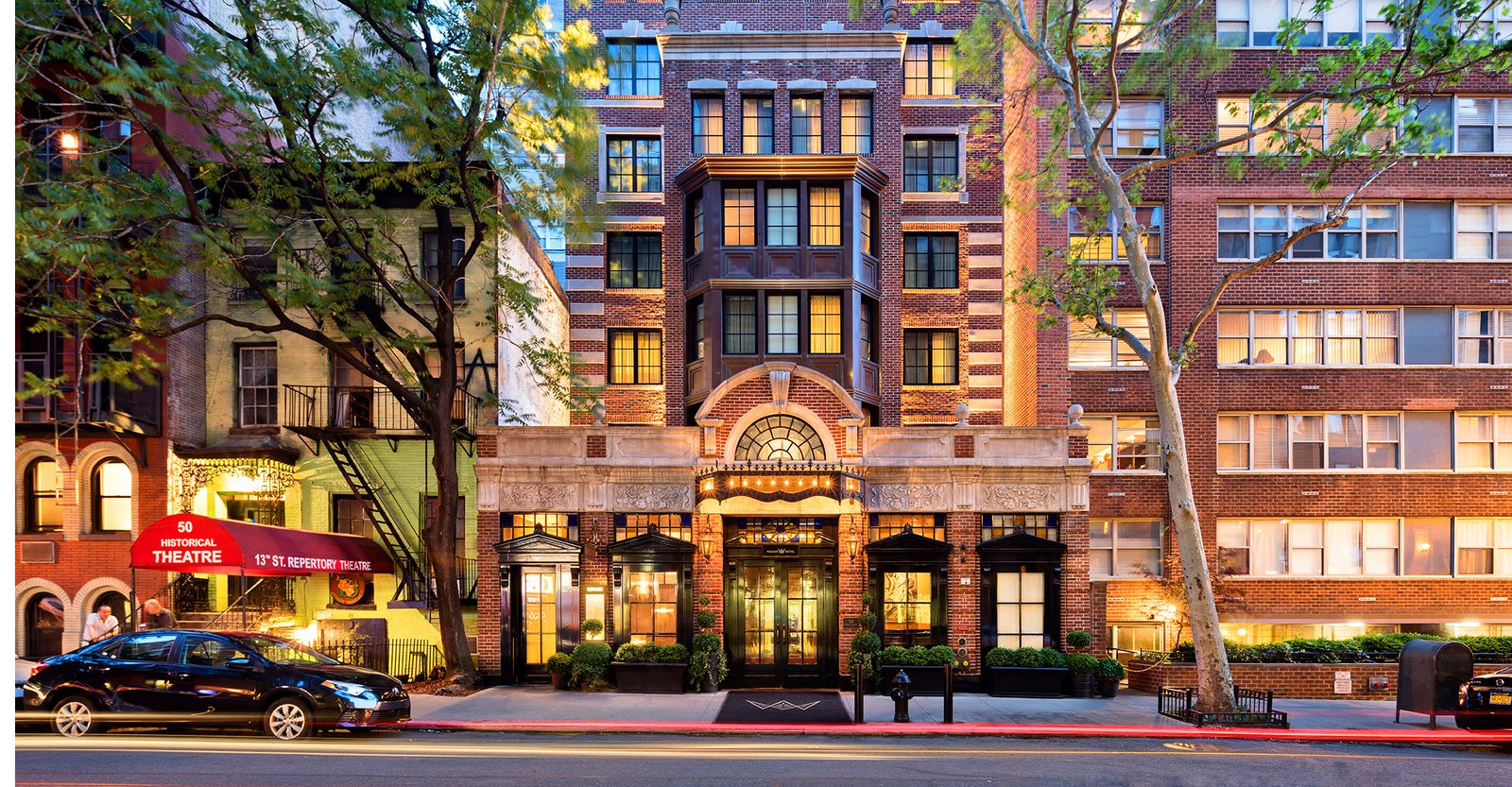
Walker Hotel Greenwich Village sits on West 13th Street, one of those tree-lined blocks that explains at a glance why everyone wanted to live in the Village. Arrival sets the tone. A sitting area with water and hot apple cider waiting is a small but very welcome gesture in a city that can feel relentlessly transactional. By evening, live jazz drifts through the lobby and the whole ground floor settles somewhere between neighbourhood hotel and private members’ club, without the paperwork or membership fees.
The rooms are compact, because this is New York and physics is non negotiable, but they are put together by someone who understands that a hotel is ultimately judged horizontally. Smooth, crisp linens, large down pillows and a quietness that, given the location, verges on the miraculous means that sleep actually arrives. Regular visitors to Manhattan will recognise this rarest luxury of all, and it’s all thanks to the large double beds and, crucially, proper blackout blinds. The tiled bathrooms have walk-in showers and generous apothecary products from C.O. Bigelow, and here the neighbourhood test is passed with flying colours, because Bigelow is not a brand licensed from a brochure; it is the Village’s own chemist, trading on Sixth Avenue since 1838, a few minutes’ walk from the hotel’s door.
Breakfast is taken at the Society Café, where a complimentary continental starts the day. The pancakes are stacked tall and improbably light. Plans made for the morning rarely survive them. But if you are staying a few days, the real Village breakfast move – and the one I recommend to the jet-lagged who are up at dawn – is Murray’s Bagels around the corner on Sixth Avenue. Doors open at six, when your body clock thinks it is nearly lunchtime; the choice is endless and the coffee hot and strong. Standing on the pavement at dawn with a proper hand-rolled bagel while Greenwich Village wakes up around you beats most things on most itineraries.
Da Andrea, directly opposite, is the Italian restaurant every frequent traveller hopes to find across from their hotel: a carbonara of real tradition and discipline, guanciale where guanciale belongs (not the imposter pancetta), and a kitchen entirely relaxed about the 5.30pm supper that jet-lag dictates on the first couple of days. The Waverly Diner, open around the clock a few blocks away, supplies the unvarnished New York of the films: coffee silently refilled, nobody watching the clock, everyone minding their own business.
Bleecker Street, where the folk revival happened and Dylan played his early rooms, still takes live music seriously. There is Terra Blues for the real thing on a second floor above the street, the Bitter End for a lineage that runs from Stevie Wonder to whoever surprises you on the night. A Village evening from the Walker’s door needs no taxi and no plan. Like the hotel itself, the neighbourhood feels lived in rather than curated, and that is precisely its charm.
Walker Hotel Tribeca
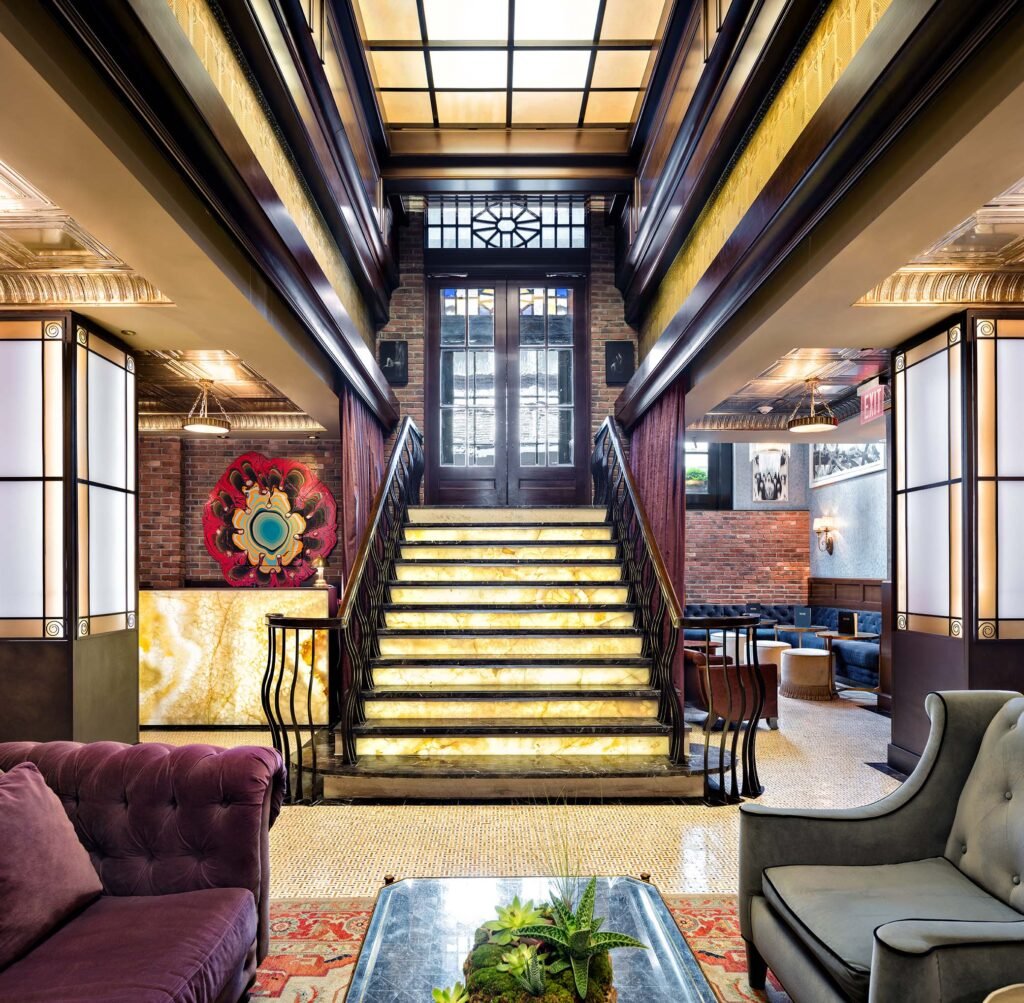
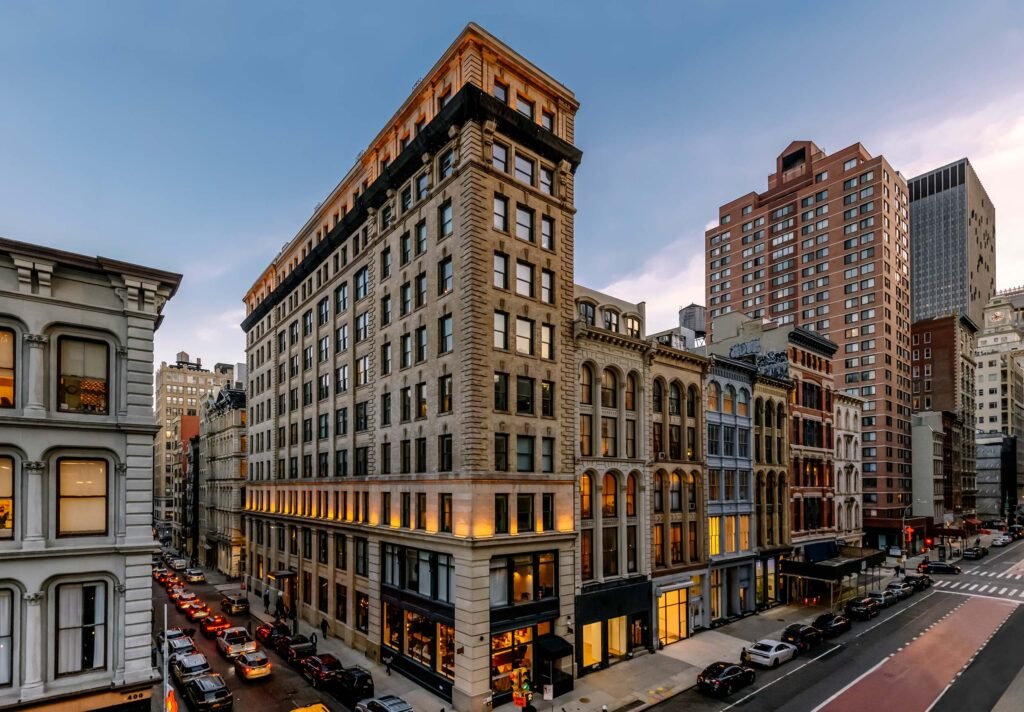
Twenty minutes south by subway, Walker Hotel Tribeca (five minutes from Canal Street subway) occupies a 1900s Renaissance-revival tower on the corner of Walker Street and Broadway, a building that spent its industrial youth as a button and ribbon factory. Tribeca is a different proposition from the Village: cast-iron facades, cobbles, converted warehouses with film-industry money behind the glass. The lobby is the neighbourhood’s place to be and be seen. Mid- century furniture of the pedigree that design editors photograph, art books people actually pick up, coffee from the Blue Bottle counter, and a permanent quorum of locals treating it as their own. No New York hotel lobby earns a higher compliment.
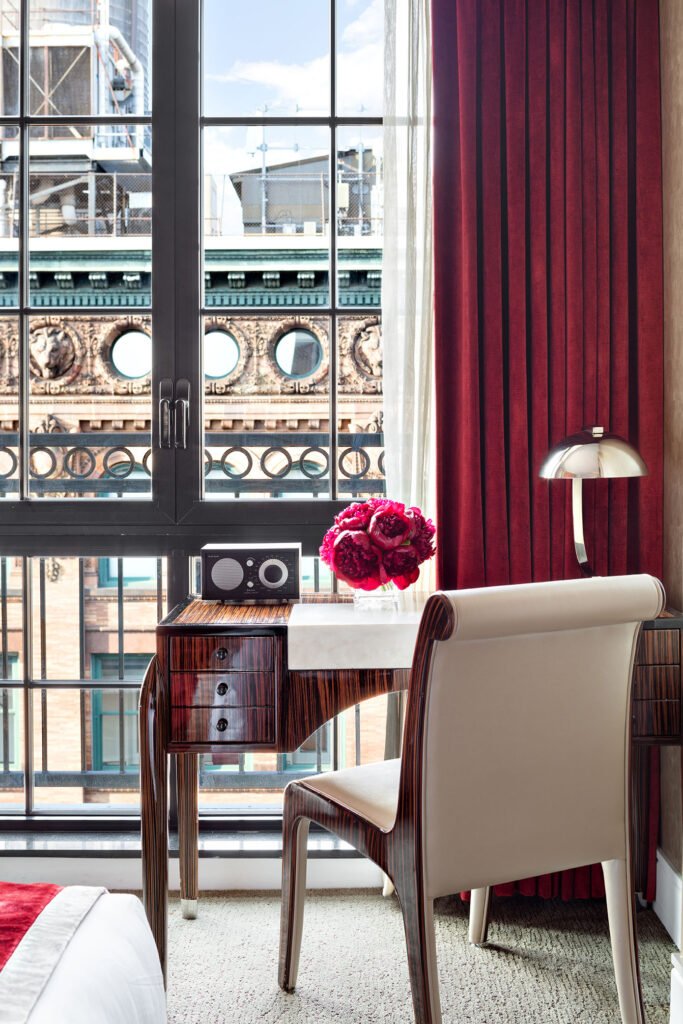
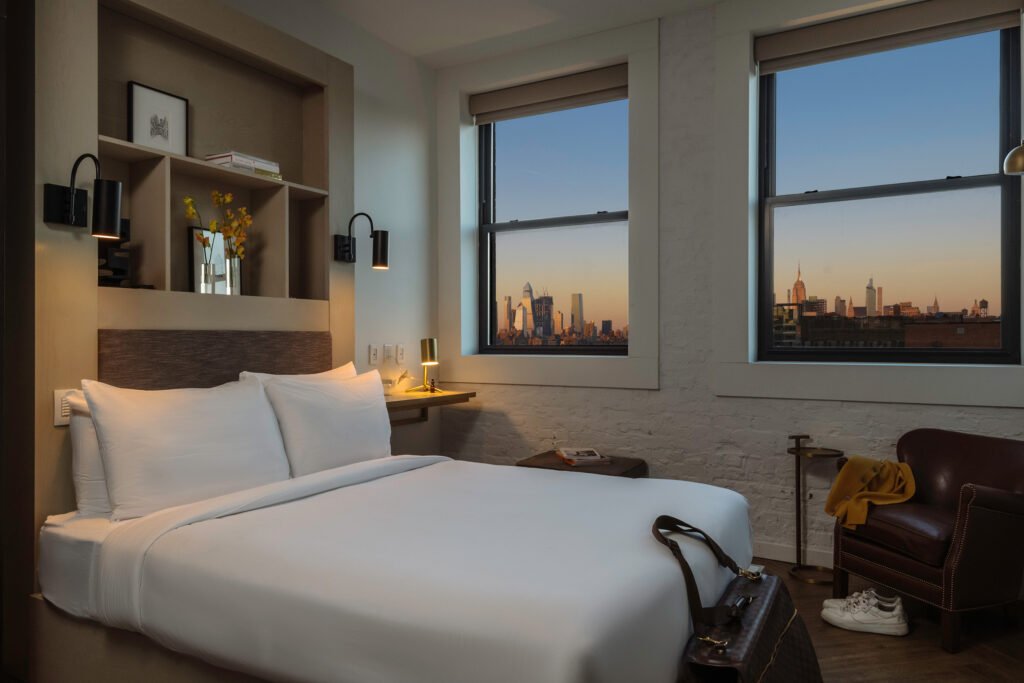
The 171 rooms are compact and clean-lined, whitewashed brick and utilitarian calm nodding to the building’s working past, with views that improve the higher you go, and there is no better place to take in Manhattan than the rooftop bar in season. But the hotel’s secret weapon is below street level. A sub-cellar bar, Saint Tuesday is candlelit and low ceilinged, with live music nightly that roams from gypsy jazz to Brazilian choro and cocktails. Most importantly, they are created by people who take their art seriously. Travellers spend whole trips hunting for places like this and residents keep them firmly to themselves.
This is the neighbourhood test, southern edition. Canal Street subway is two blocks away, and SoHo, Chinatown and Little Italy are all within a ten minute walk. Few corners of Manhattan make a better strategic base. Walk west and Tribeca unfolds in quiet cobbled streets to Hudson River Park and the water; walk five minutes in most directions and dinner options improve with every block, from the neighbourhood’s storied dining rooms to the newer arrivals. This is downtown with the volume adjustable, and the hotel sits precisely on the dial.
Which Walker?
Walker Greenwich Village is for the romantics with live jazz in the lobby, brownstone streets you recognise from the films, bagels and coffee at dawn, an evening that ends three doors from your pillow. While Walker Hotel Tribeca is for the downtown appetite: contemporary design with pedigree, one bar in the cellar and another on the roof, and the most walkable triangle in the city. What they share is independent ownership, shown in the details. The cider at the door, the chemist’s soap from around the corner, the band playing while you check in. New York will always have hotels with bigger names, larger rooms and taller atriums. These two have something better: an address each, a neighbourhood each, and owners who know what makes the difference. Book whichever version of the city you are, and if you can’t decide, the subway between them takes twenty minutes, so stay at both. Rooms at Walker Greenwich Village start from $475 plus tax, while Walker Hotel Tribeca is from $275 plus tax.
Discover more
walkerhotels.com
About the author
Lulu Townsend has been immersed in the world of luxury hospitality for over two decades transforming her family’s boutique property in Umbria into a Condé Nast Traveller favourite and advising global names such as The Langham Hotel. Follow her on Instagram: @lulusluxurylifestyle