


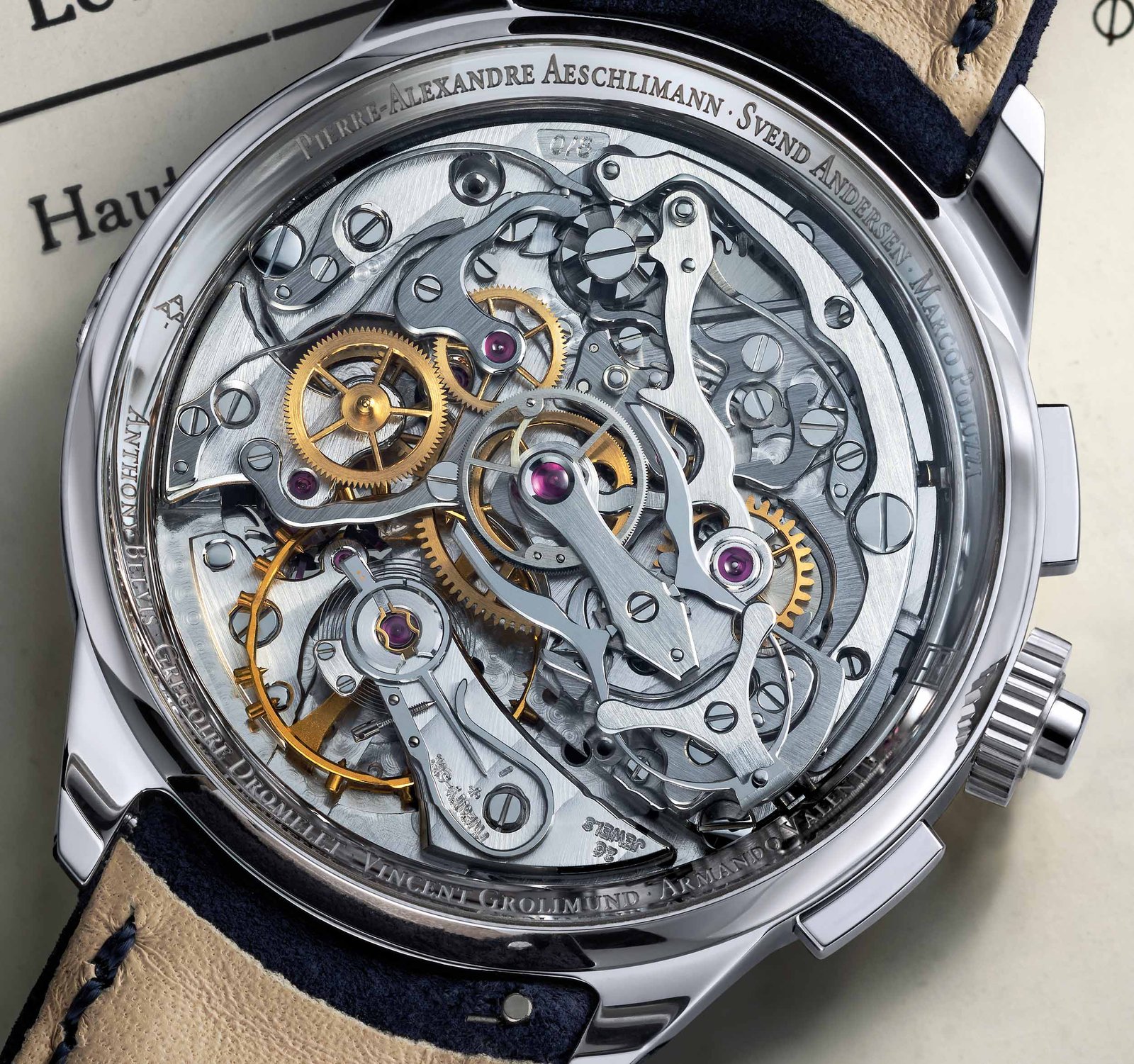
Svend Andersen founded ANDERSEN Genève in 1980. Forty-five years on, the company still operates from its original workshop overlooking the Rhône in the historic Saint Gervais area of Geneva – once home to the city’s famed Les Cabinotiers watchmakers. ANDERSEN Genève creates around 50 watches per year, each one a rare and timeless work of art. In fact, fewer than 1,400 timepieces have been manufactured since 1980. For the last three years, the watchmaker has overseen a second workshop for casemaking in La Chaux-de-Fonds. We caught up with Svend to explore his relationship with the worldtimer concept.
What was your first experience of the worldtime complication?
I moved from Denmark to Switzerland in 1963, and because I could speak good English, I got a job at Gübelin [the Swiss high-end watch retailer] in Lucerne. There, I had the chance to repair some of the original worldtime watches, with Louis Cottier’s mechanism. That was my first real encounter with the complication, and it stayed with me.
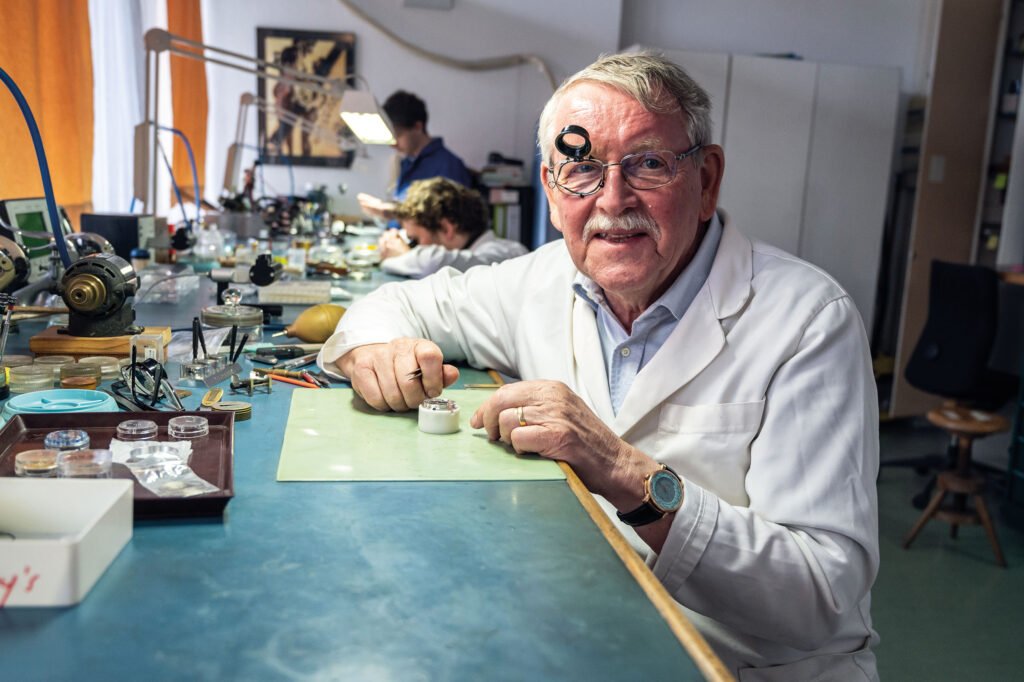
In the 1970s, you were part of a three-man team in Patek Philippe’s Grand Complications workshop, alongside Roger Dubuis and Max Berney. Did you encounter many worldtimers there?
Absolutely. Louis Cottier had died in 1966 and Patek Philippe stopped making worldtimers after that. But we would repair them, and once someone came to me with trays of parts from the old Cottier worldtime watches from the 1950s. They asked, “Can we make watches from these?”
I looked at them carefully and said, “I think we can save three movements from this.” The parts went to another workshop, they made three gold cases, and that was that. But it taught me something important: how special this concept was, how beautiful, and how rare.
You went solo in 1979, and spent the 1980s making first pocket-watch cases and then one-off bespoke watches. What led you eventually back to the worldtime?
Some Italian collectors were asking me for something more interesting than just hours, minutes and seconds. I remembered those old Cottier watches, and I thought, why not a worldtimer? So, I began developing my own version. I designed a completely new module, much thinner than what was around at the time. Mine was just 0.9 millimetres, everything included. There weren’t many others around, and those that were used modules that were thicker, like the one from Lemania, and that made the whole watch too bulky. For me, slimness and elegance are very important, especially for a worldtimer.
The Communication started off as a subscription edition of 24 watches. What was the response from collectors like, and how did you get the word out?
When I developed the prototype version, in 1989, I presented it to a German journalist. He published an article, and within two weeks we had 18 subscriptions – out of a planned edition of 24. The other six came soon after. The subscription model meant that people paid 50 per cent in advance, and that gave me the funds to buy gold for the cases and to begin production. We actually made 25 cases – the 25th, which had no lugs at all, I kept. It’s my wife’s watch to this day.
From there, you made the series-produced Communication, as well as a handful of special versions with different dial designs. Why do you think there was such a market for it?
Well of course I was very happy about that. It was very pleasing that so many good people, really committed collectors who loved watches, wanted it. Patek Philippe wasn’t making worldtimers at that time, so in a way, there was a gap in the market. Ebel and a few other brands were doing them, but not really refined. I was going back to what Cottier had invented. The different dials were made according to the different requests from my retail partners. For example, a cream colour dial with gold map was requested by Yoshi Isogai of the Shellman Boutique in Tokyo. He sold dozens of such Communication with white dials to high-end Japanese collectors. There was also a black dial version, which was requested by Mr Fagnola of the Fagnola boutique in Turin, for one of his long-time Italian clients.
Discover more
andersen-geneve.ch