



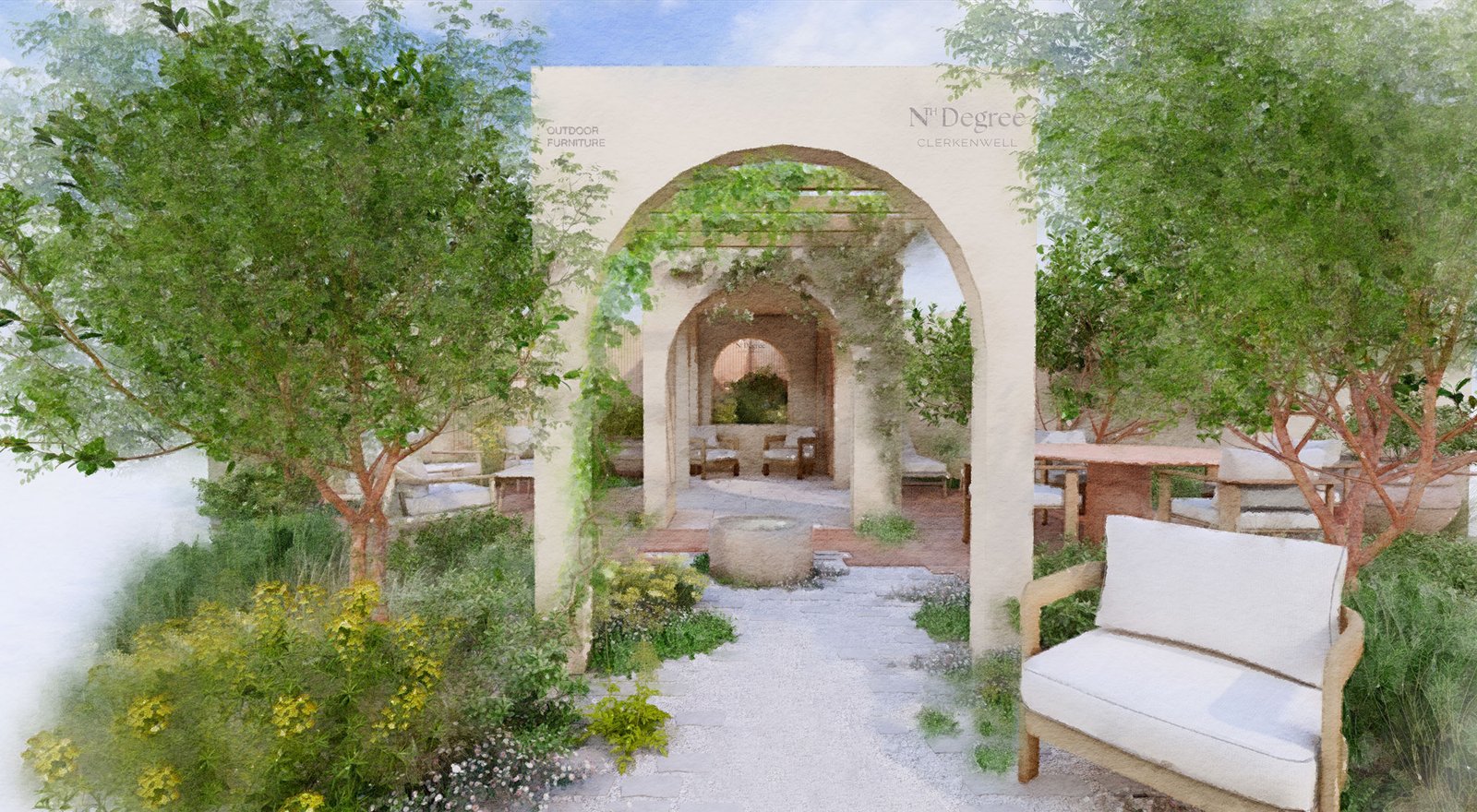
The RHS Chelsea Flower Show 2026 is fast approaching, with one of the most anticipated exhibits, luxury outdoor furniture brand Nth Degree’s partnership with Charlotte Rowe, expected to draw huge crowds on 19–23 May.
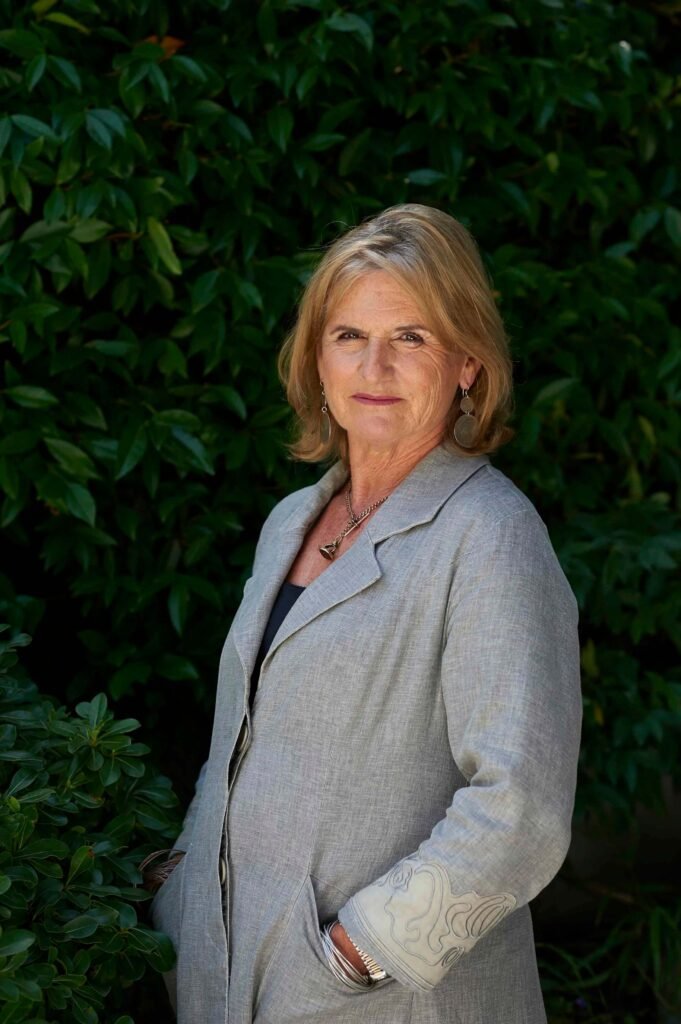
Charlotte Rowe, one of the UK’s most respected garden designers, founded her west London studio in 2004. She has since designed more than 300 gardens — from roof terraces in the capital to sweeping country landscapes. In 2014, she became the first Chelsea Flower Show first-timer to design a gold medal-winning large main avenue show garden, with ‘No Man’s Land’: a deeply personal tribute to the centenary of the First World War, inspired by the service of two of her grandparents. She was also recently awarded a Fellowship of the Society of Garden and Landscape Designers (SGLD), one of the profession’s highest honours.
Ahead of the show Charlotte discussed her creative approach, what to expect from her new exhibit with Nth Degree, the unwritten rules of garden furniture, and why you should never, under any circumstances, redesign your garden in May.
Your work spans everything from London roof terraces to large country landscapes — do you have a favourite scale to work at, and if so, why?
Both have their own particular attraction, and I find we need both smaller town gardens and country landscapes to stay creatively alive. Town gardens are intensely satisfying — the constraints are tight, the process is swift, and there’s something deeply rewarding about watching a vision become reality within a season. Country projects are different. Time is less compressed, nature sets the pace, and clients tend to trust the longer arc of growth. In a way, each scale teaches you something the other cannot.
You’re back at Chelsea Flower Show 2026, working alongside Nth Degree. What’s the creative concept behind the exhibit?
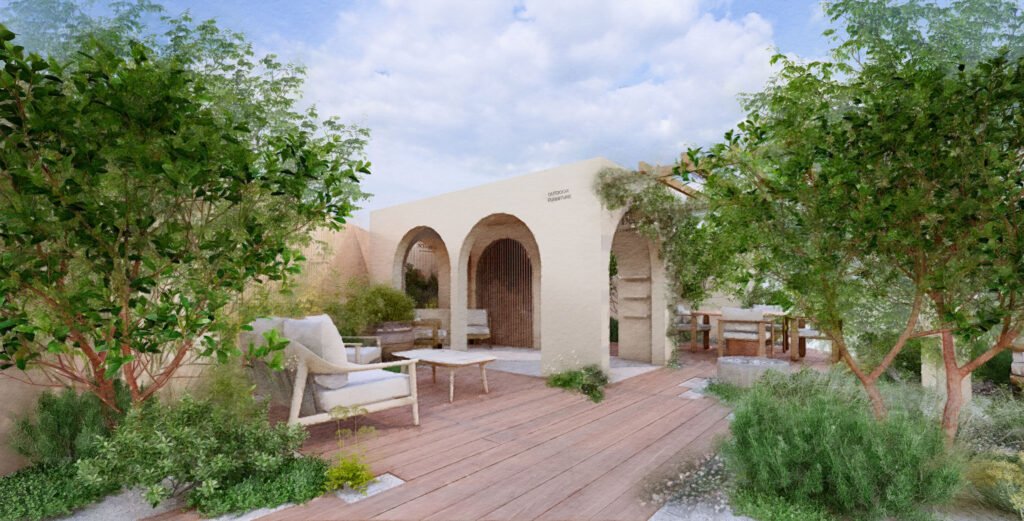
The brief for the Nth Degree stand was a Mediterranean feel, and rather than take the obvious route, we asked ourselves: what does Mediterranean actually feel like? Not the postcard version — but the lived-in one. So, we imagined the stand as a fragment of a rustic villa — timeless and well-loved — reimagined through the lens of Nth Degree’s beautiful contemporary furniture. The mood and ambience we wanted to create was warm, earthy and slow living.
How do you approach planting when designing around luxury outdoor furniture — where’s the balance?
Good outdoor furniture tends to have real confidence in its lines — clean, precise, often architectural. Our instinct is never to compete with that, but to offer something in contrast. On the Nth Degree stand at the Chelsea Flower Show, rather than echo or compete with the furniture through formal or minimal planting, we did the opposite. The planting is soft, natural and has a little movement. It’s that tension between the crafted and the living that makes a space feel genuinely inhabited rather than staged.
What’s one common mistake you see people make when incorporating garden furniture into their garden designs?
Choosing green furniture. It sounds counter-intuitive in a garden, but the human eye is extraordinarily good at detecting artificial colour within nature — and ‘false’ green is almost impossible to hide among real foliage. We have a simple rule in the studio: leave green to the plants. Furniture in stone, charcoal, warm terracotta, buff colour, natural teak — these sit in the landscape rather than argue with it. The garden will always ‘out-green’ anything you put in it.
Your philosophy is that gardens should mirror the interior of a home. How do you apply that to a show exhibit?
It’s less about aesthetic style and more about spatial awareness. In a domestic project, we spend a long time reading the house — its floor plan, its proportions, the way it hits the ground and joins the outdoor space — before considering even a single plant. The garden should feel like a natural extension of that structure, not a separate environment bolted on. At the Chelsea Flower Show, the exhibit structure itself becomes the reference point. We’re always asking: how does the volume of the hard landscaping speak to the softness of the planting? Where does one give way to the other? When that balance is right, you feel it before you understand it — there’s a quality of calm that settles over the space.
Your 2014 Gold Medal garden, ‘No Man’s Land’, carried a strong emotional narrative. How important is storytelling in designing a show garden?
It’s really important. As a designer and ‘conceiver’ of a show garden, there has to be inspiration, passion even. I was inspired to design my 2014 Chelsea Flower Show garden — marking the outbreak of World War One — by two of my grandparents. One went over the top on the first day of the Battle of the Somme on 1 July 1916, at the age of 19, survived, and recorded it in his memoirs. One of my grandmothers served many years as a front-line nurse during World War One and was awarded a rare Military Medal for bravery.
From that family history, I was able to envision a show garden which sought to look at the way that the landscape — as well as people — can survive war and conflict.
You recently received an SGLD Fellowship — what does that kind of recognition mean to you at this stage of your career?
I have been a member of the SGLD since my second year in practice, and I am totally engaged and committed to furthering and fostering professionalism in this space. It was a great honour to be made a Fellow.
Your gardens are known for generous planting — how do you choose which plants make the cut for a show garden specifically?
Function comes before appearance or colour of a plant, always. We’re looking first for reliability — for example, ground cover plants that perform consistently, that are bushy from the base, that hold their ground without constant intervention. For the Chelsea Flower Show specifically, robustness is everything: the show environment is genuinely demanding — full sun exposure, repeated handling during the build, and continuous foot traffic throughout the week. We also love to include at least a few mature specimens. A plant that has age brings instant atmosphere; it suggests the garden has already lived a little.
Hard landscaping and planting have to work in harmony within your designs — how do you decide where one ends and the other begins?
Honestly, much of it is intuitive — it’s a feeling you develop over years of looking carefully at spaces and understanding how people move through them. But if I were to offer something useful to someone starting out: let the structure lead near the house and gradually soften as you move away from it. More stone, more architecture close to the property; more wildness, more abundance at the far end of the garden or landscape. It mirrors the way we actually use and walk around a garden.
For someone feeling inspired by a visit to the Chelsea Flower Show — what’s the one thing to consider before redesigning their outdoor space?
Don’t redesign your garden in May. Chelsea is one glorious, extraordinary week of peak bloom — and it can make you fall in love with plants you’ve never grown and schemes that depend entirely on that single moment of the year. A truly great garden has to earn its place across every season — the bare bones of January, the quiet of November, the slow build of early spring.
The images are computer generated and show Charlotte’s work with, luxury outdoor furniture brand Nth Degree.