


For decades, Caribbean luxury has conjured images of turquoise waters, coral reefs, and impeccable service. Today, that image is shifting. The region’s high-end tourism sector is entering a new era – one defined by responsibility, restoration, and reciprocity. This is the age of regenerative tourism.
Unlike traditional sustainable tourism, which seeks to minimise negative impacts, regenerative tourism aims to restore, renew, and revitalise the places travellers visit. It is built on the premise that travel should leave destinations better than before. Across the Caribbean, this manifests as coral reef restoration, reforestation, community agriculture, and cultural heritage revitalisation – all interwoven with the luxury experience.
This transformation is not only ethical but urgent. According to the International Coral Reef Initiative (ICRI), coral reefs – which form the ecological foundation of Caribbean tourism – generate an estimated US$3.4bn annually through tourism, fisheries, and coastal protection. Research from UNEP shows that roughly 23% of regional tourism expenditures depend on reef-adjacent activities such as diving and beach recreation. These reefs also sustain more than 100,000 jobs and 3,000 small businesses, say the ICRI. As climate change and coastal degradation accelerate, regenerative practices offer a path toward resilience.
There are a number of establishments across the Caribbean embracing regenerative luxury to ensure that local communities are benefitted by tourism, that environmental stewardship is paramount, and ultimately, that visitors experience these wonderful islands in a sustainable light. Here are some examples:
Rockhouse Hotel & Spa, Jamaica
At Rockhouse in Negril, luxury is intertwined with community upliftment. Through the Rockhouse Foundation, the resort funds education programmes for over 800 local children annually while advancing coral reef restoration. Guests are invited to participate in artisan workshops and culinary classes that celebrate Jamaican heritage – demonstrating how cultural regeneration complements environmental stewardship.
Jamaica Inn and the White River Fish Sanctuary
This resort exemplifies regenerative partnerships. Working with local fishers, Jamaica Inn co-manages a 370-acre marine sanctuary dedicated to coral restoration and habitat mapping. According to the Caribbean Hotel and Tourism Association, since its inception in 2017, the sanctuary has recorded a 500% increase in fish biomass in rehabilitated reef zones. This initiative underscores how community collaboration and scientific management can yield tangible ecological recovery.
Kittitian Hill, St. Kitts & Nevis
Built on the philosophy of ‘sustainable luxury’, Kittitian Hill integrates regenerative architecture, organic farming, and cultural immersion. The 400-acre property sources food directly from its own agroforestry systems and supports local artists through residencies and exhibitions. The project demonstrates that economic vitality and ecological health can coexist within high-end hospitality.
Oil Nut Bay, the British Virgin Islands
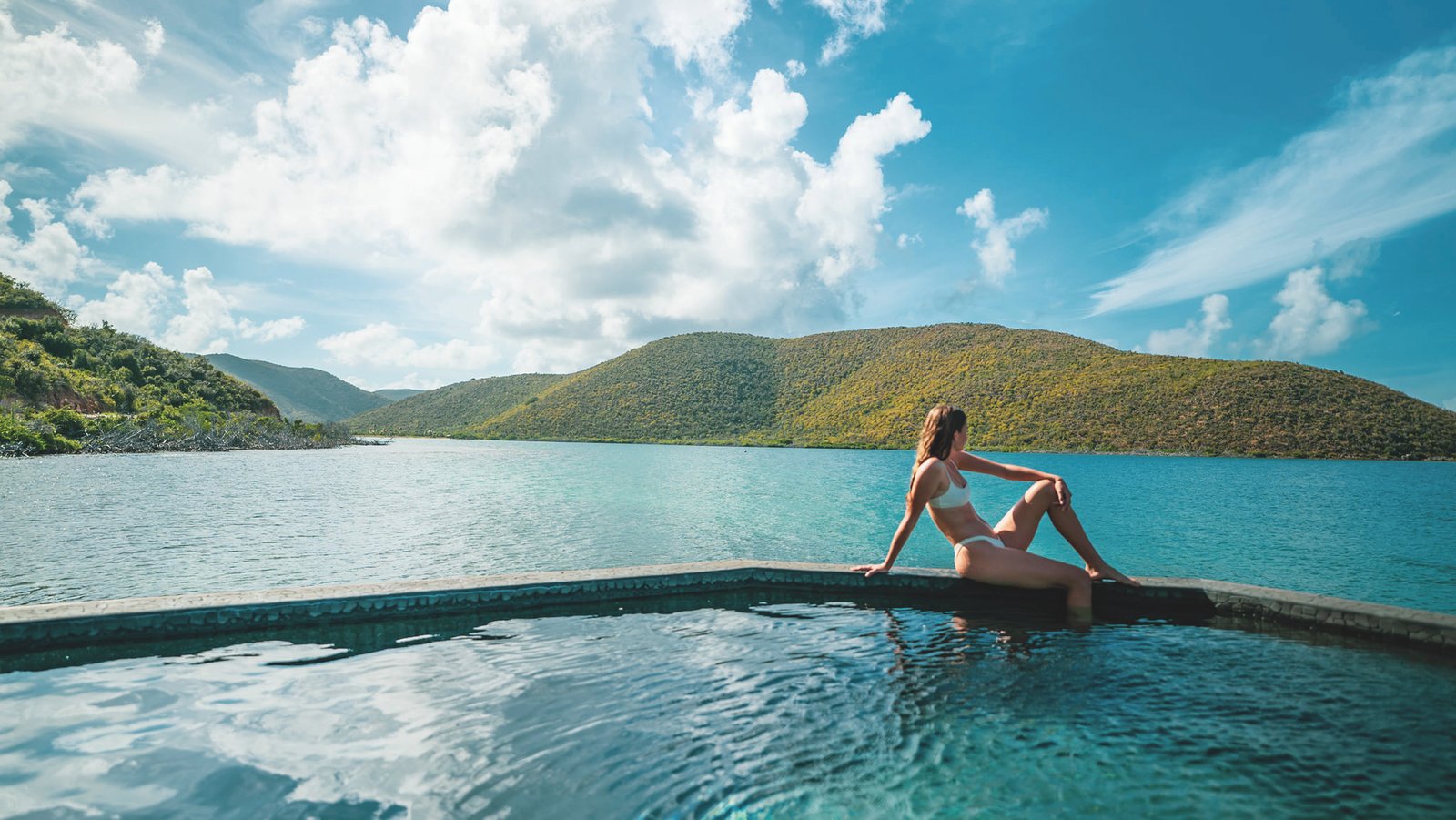
Spanning 400 acres, Oil Nut Bay (all images) features LEED-certified villas, electric vehicles, and solar desalination. Half the land is preserved for conservation.

Salterra Resort, Turks & Caicos
Located within a 480-acre nature reserve, the new Salterra Resort blends regenerative design with marine research. Guests can tour a coral nursery, assist scientists at a biobank, and support youth training in reef conservation. More than 400 coral fragments have been outplanted during its first operational year, highlighting the measurable outcomes of luxury-funded restoration. Hamanasi Adventure & Dive Resort, Belize Hamanasi integrates conservation and comfort through a comprehensive regenerative approach: reef monitoring, native tree planting, waste minimisation, and environmental education. The resort’s partnership with conservation NGOs and its Green Globe certification reinforce its reputation as a model for adventure-based regenerative tourism.
Regeneration beyond ecology
This regenerative shift extends beyond environmental projects – it is reshaping how Caribbean resorts measure success. Many properties now integrate regenerative metrics into corporate reporting, tracking carbon emissions, biodiversity gains, and community benefit indicators (UNEP, 2023). Partnerships with NGOs and universities ensure scientific rigour and third-party validation. Governments across the region are also responding. Policy incentives, renewable energy grants, and sustainable certification programmes are encouraging the private sector to adopt regenerative models. As Sheller (2021) argues, post-pandemic tourism recovery in the Caribbean must align climate resilience with social equity – a balance regenerative tourism strives to achieve.
Traveller preferences show momentum
According to the 2024 Virtuoso Luxe Report, 76% of luxury travellers now seek destinations where their spending contributes to local or environmental regeneration. Ethical indulgence has become the new currency of prestige. Regenerative tourism in the Caribbean also restores cultural vibrancy. From culinary heritage to crafts, music, and storytelling, regeneration honours the living traditions that give the region its soul. In Barbados, PEG Farm & Nature Reserve connects visitors to regenerative agriculture, organic food systems, and indigenous reforestation (PEG Farm & Nature Reserve, 2025). Such initiatives not only enrich visitor experiences but also safeguard intangible heritage and provide sustainable livelihoods. As Rastegar (2025) emphasises, regeneration without regenerative justice risks reproducing inequalities. True regeneration ensures that communities are co-creators – sharing in both decision-making and the economic dividends of tourism. The Caribbean’s exposure to climate impacts makes regeneration essential. Integrating regenerative principles into national tourism strategies, creating regional certification systems, and establishing financing mechanisms can accelerate adoption. In the emerging paradigm of Caribbean tourism, luxury is no longer about exclusivity – it is about impact. For travellers, regenerative luxury offers the rare privilege of indulgence with conscience. For Caribbean communities, it provides pathways to resilience, pride, and prosperity. And for nature, it represents the chance to heal. Caribbean luxury, once synonymous with escape, is now about engagement. To visit is to contribute. To stay is to restore. And to experience the Caribbean in this way is to witness the true meaning of regeneration.
Further information
onecaribbean.org

About the author
Narendra Ramgulam is Deputy Director of Sustainable Tourism at the Caribbean Tourism Organization.