


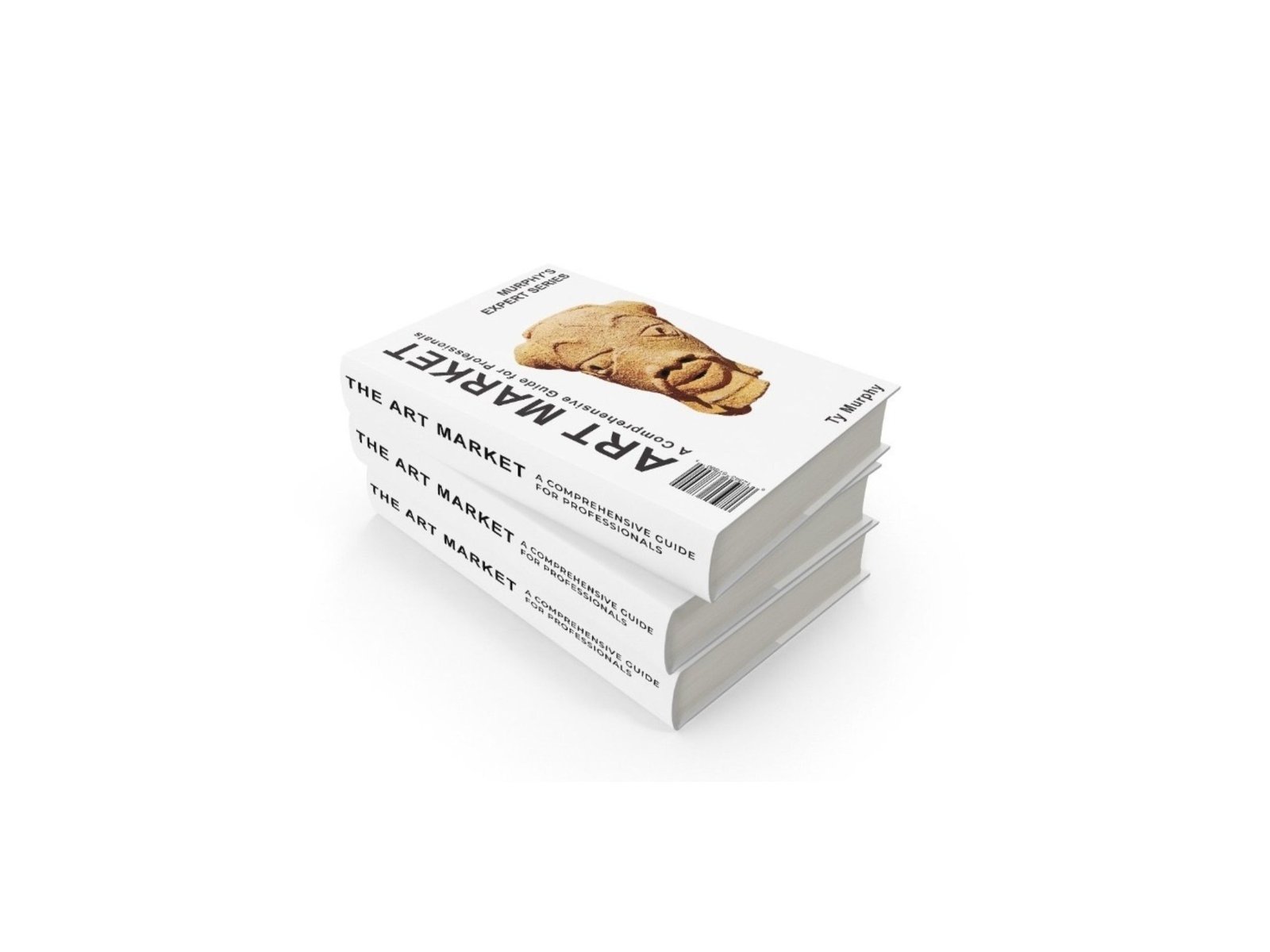
Ty Murphy LLM has released a significant new book, The Art Market, a wide-ranging professional guide designed to help collectors, advisers, investors, and art world participants navigate one of the most fascinating yet opaque sectors in global commerce. From the front matter alone, the scale of the work is striking: the book runs to more than 700 pages including glossary and index, and its table of contents reveals a deeply structured treatment of the art market from first principles through to forensic science, digital disruption, and specialist professional practice.
At its core, The Art Market appears to be built as both a reference work and a practical operating manual. The foreword describes it not simply as another art title, but as “a comprehensive toolkit” for understanding the art market with precision and ease, whether the reader is a seasoned collector, a professional adviser, or a newer entrant trying to understand the mechanics of the field. That positioning is important, because the modern art market is no longer just about connoisseurship and taste. It is also about contracts, provenance, sanctions, logistics, taxation, compliance, authenticity, restoration, reputational risk, and increasingly, technology.
The structure of the book suggests that Murphy has approached the subject with unusual breadth. The opening chapters establish the foundations: how the art market works, who its participants are, which institutions shape it, and how art moves through commercial and cultural channels. These early sections cover participants, infrastructure, market dynamics, transactions, regulation, international reach, risks, sustainability, and emerging trends. In other words, the reader is first grounded in the architecture of the market itself before being asked to engage with more technical or specialist issues.
From there, the book broadens into the ecosystem of professionals who make the market function. Advisors, consultants, dealers, auction-house specialists, appraisers, conservators, forensic examiners, lawyers, tax advisers, provenance researchers, art journalists, digital curators, and technology developers all feature in the contents. That is a notable strength. Many books on the art market focus heavily on objects and prices, but Murphy’s framework makes clear that the market is actually an interdependent network of expertise, judgement, trust, and documentation. This professional mapping alone should make the book useful to readers who need to understand not just what they are buying, but who they should be speaking to and why.
A particularly strong area is the legal and risk architecture of the book. The contents show dedicated chapters on the art market legal framework, art law and contracts, law enforcement awareness, due diligence, KYC and AML, sanctions, tax havens, and free ports. That sequence indicates a serious understanding of where real problems arise in the art world. The preface reinforces this by stating that the book is meant to demystify the market through “clear, actionable insights” and to help readers address authenticity, ownership history, legal frameworks, seller risk, and precautionary measures in a more disciplined way. For professionals and serious collectors, this is where a book becomes genuinely valuable: not when it romanticises the market, but when it helps readers survive it intelligently.
The commercial and wealth dimensions are also extensive. Murphy includes chapters on acquisitions, collections, collection management, lending and philanthropy, valuation and
appraisal, art-based lending, art funds, fractional ownership, and the art investor. This gives the book a broader reach than many conventional art guides. It does not treat art only as an object of beauty or scholarship; it treats it as an asset class, a legal subject, a managed holding, and in some cases a financing instrument. That reflects the reality of today’s upper-tier art market, where private clients, family offices, fiduciaries, and specialist advisers increasingly require cross-disciplinary understanding.
One of the most distinctive parts of the structure lies in the later chapters. Murphy moves into fine art on superyachts and private jets, conservation and restoration, provenance research, fakes and forgeries, and then into scientific and forensic examination. The forensic section is especially ambitious, covering optical techniques, X-ray methods, mass spectrometry, non-destructive imaging, Raman spectroscopy, and case studies. This is not a superficial nod to authentication; it signals an attempt to bring scientific examination into the mainstream of art-market literacy. In a market repeatedly shaken by attribution disputes and high-value frauds, that is a serious contribution.
The digital section is equally expansive. Under “The Digital Revolution,” the book includes artificial intelligence, blockchain, NFTs, the metaverse, online galleries, 3D printing, and wider immersive and digital technologies. The foreword specifically highlights the book’s ability to keep pace with developments such as blockchain and NFTs, while the table of contents shows that Murphy goes much further by examining how digital tools may affect authentication, sales, copyright, curation, and distribution. That matters because the art market is no longer divided neatly between old masters and new media; it is being reshaped by hybrid forms of ownership, evidence, access, and promotion.
The final impression is that The Art Market is not merely a book about art appreciation. It is a book about art infrastructure, art risk, art law, and art strategy. Its chapter list ranges from core market dynamics to blacklists and brokers, art-related public relations and marketing, art criticism, journalism, and even reclamation of architectural treasures. That range suggests a work written by someone determined to show the reader the market in the round rather than through a narrow curatorial lens.
For those already familiar with Ty Murphy’s work, this release also sits alongside another notable first: Training Household Staff to Care for Art and Antiques, a title that addresses the equally important but often overlooked area of stewardship once works are already in situ. Taken together, the two books reflect a practical publishing direction: one focused on navigating the acquisition, legal, and market-facing side of art, and the other on the standards of care, handling, and preservation required after acquisition. That is a useful pairing for collectors, estates, and art professionals alike.
The Art Market is available to purchase via Amazon here
About Ty Murphy LLM

Ty Murphy LLM, private client estate planning lawyer working within the family office space, has spent years advising clients connected to major art collections and complex private wealth matters. Now, that experience is brought into the public domain through his highly anticipated book on the global art market.
Drawing on practical experience from the worlds of law, due diligence, private clients, and high-value collections, this new work offers a rare insider perspective on how the art market truly operates.