


As someone who had become fascinated with K-dramas and K-pop over recent years, it was only a matter of time before I headed to South Korea to experience the culture and lifestyle for myself.
I first spent two weeks in Seoul in 2024, but didn’t properly get to grips with all that the city had to offer. Possibly I was inhibited by the overwhelming nature of the city, and held back from exploring the true depths of this diverse metropolis. So, I returned in late 2025 with a new attitude, determined to open myself up to what Seoul has to offer. I discovered a city more rewarding than most, home to welcoming locals, beautiful parks, fashionable shopping districts, incredible restaurants and a bustling nightlife. Home to around 9.5 million people, Seoul has a vibrant 24/7 energy that must be experienced to be believed.
Five-star Seoul
Seoul also has a global reputation for luxury and impeccable hospitality and this is encapsulated by the many five-star hotels across the city, which showcase the best that the country has to offer.
One of the finest hotels is the Four Seasons Seoul, located near Gwanghwamun, a vibrant hotspot in the heart of the city. My suite provided the perfect sanctuary to unwind after the fabulous hustle and bustle of the city beyond. Also, with my room overlooking one of the busiest crossings in Seoul, it gave me a unique vantage point to watch daily life unfold.
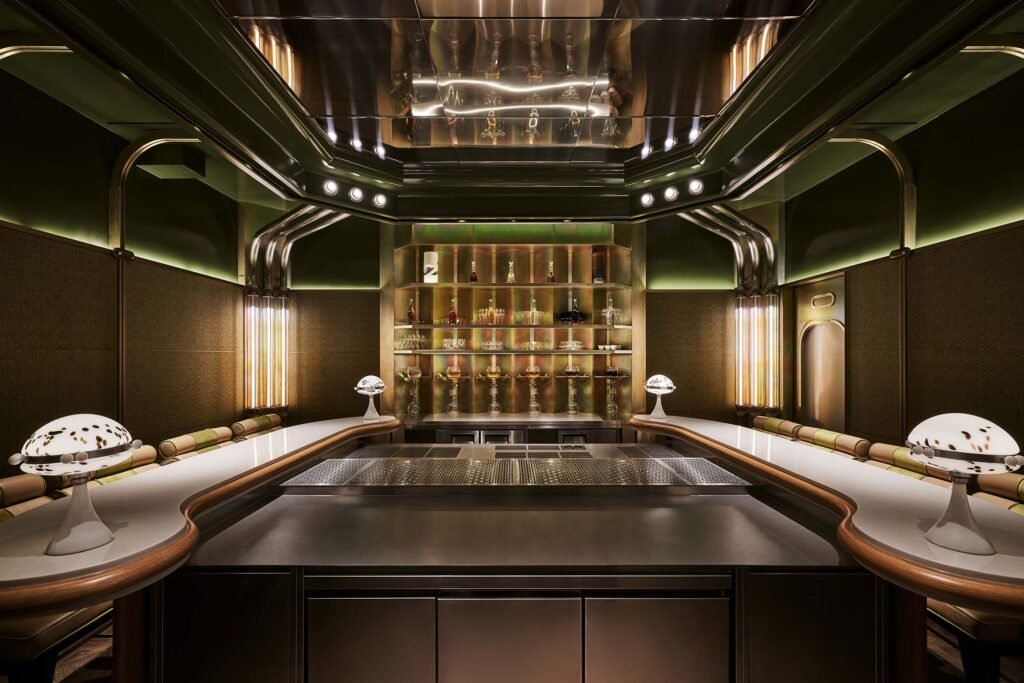
One of the highlights of my stay at the Four Seasons Seoul was a special evening at the intimate H. Bar (below) for a course-style cocktail experience. When I was approached with the idea of an eight-course cocktail evening served with accompanying light bites at one of the leading hotels in the city, I was instantly sold. Fascinated to see how this concept would unfold, I walked downstairs to the Charles H. Bar, a hidden dimly-lit speakeasy with an old-time elegance. I was then led to the back, where the H. Bar was located for something different entirely – an extraordinary interior like something out of a sci-fi movie.
A knowledgeable bartender who used hyper-seasonal ingredients to elevate the drinks and accompanying snacks guided me through the experience, and I was impressed by the variety of flavours from an ‘Alcopop’ cocktail, taking me back to my teenage years, to more earthy and nutty tastes. There was even a cocktail inspired by Heston Blumenthal’s The Fat Duck, with the use of liquid nitrogen to add theatre and another layer to the taste and texture.
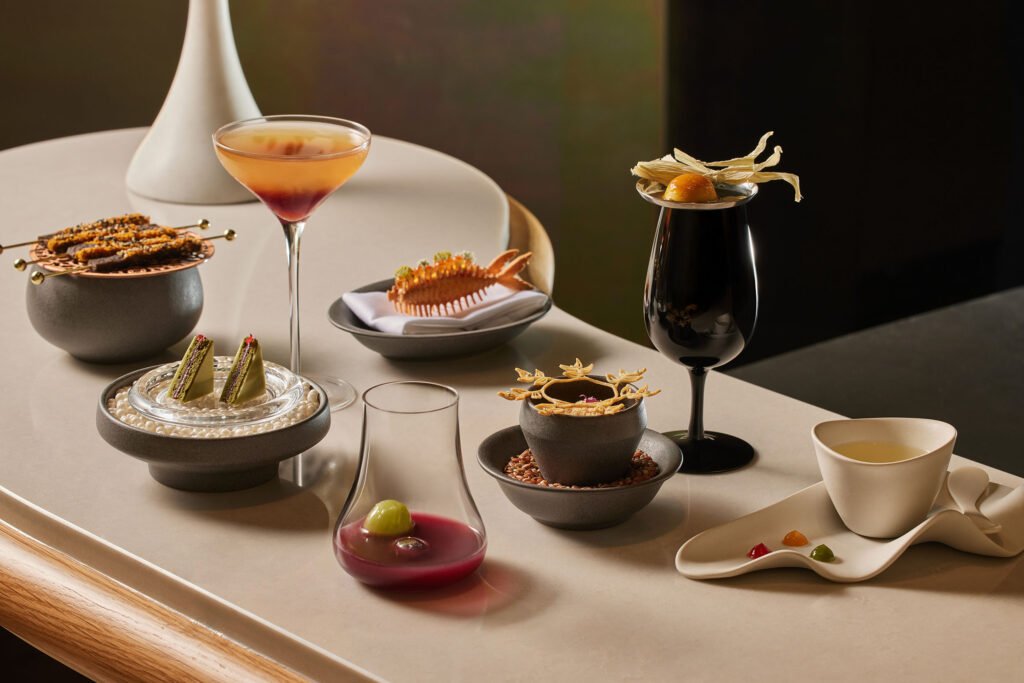
At the halfway point, I was served a Korean rendition of the classic Italian cocktail and dessert hybrid, ‘Sgroppino.’ It was served as a sorbet and made from seasonal Korean flavours, such as green mandarin, sparkling pear and mandarincello. It was a refreshing drink that served as a palate cleanser, giving me a new lease of life just as I was starting to feel a little heady. It was incredible to see the absolute level of detail and care that goes into making cocktails of this extraordinary calibre. With the fast-paced nature of popular bars, you don’t always appreciate the skills required or the concepts behind the drinks. However, with a front-row seat at the intimate H. Bar, you enjoy an uninterrupted insight into the process, and how the drinks have a unique connection with South Korea.
The next morning began with a big buffet breakfast in the Four Seasons Seoul’s modern and spacious dining area. The hotel serves a wide selection of Korean foods as well as UK and US breakfast staples, such as bacon, sausage and hashbrowns. There was also a continental-style selection of sliced meat, cheese, pastry and dessert. All tasted delicious.
I then headed for a sauna, my first experience of the Korean variety. I tried the cold, warm and hot baths, as well as the wet and dry sauna rooms. It was 10 a.m., so it was quiet and even more relaxing, providing me with a spring in my step for the day ahead.
Above the city
During my first trip to Seoul in 2024, I spent a night at The Shilla, a five-star hotel located in the Jung-gu district of the city. Despite being so close to the heart of the action, The Shilla felt like a luxurious escape from the bustling metropolis beyond. The Jung-gu district is 50 metres above sea level, so your steep ascent into the mountains really makes it feel like you’re leaving the city behind.
The Jung-gu district is one of the biggest business hubs of the city, and it boasts a unique charm – a place where the old and new worlds merge. It is home to historic landmarks such as Deoksugung and Namdaemun, and also one of the main shopping districts with modern boutique shops and authentic markets in Myeong-dong
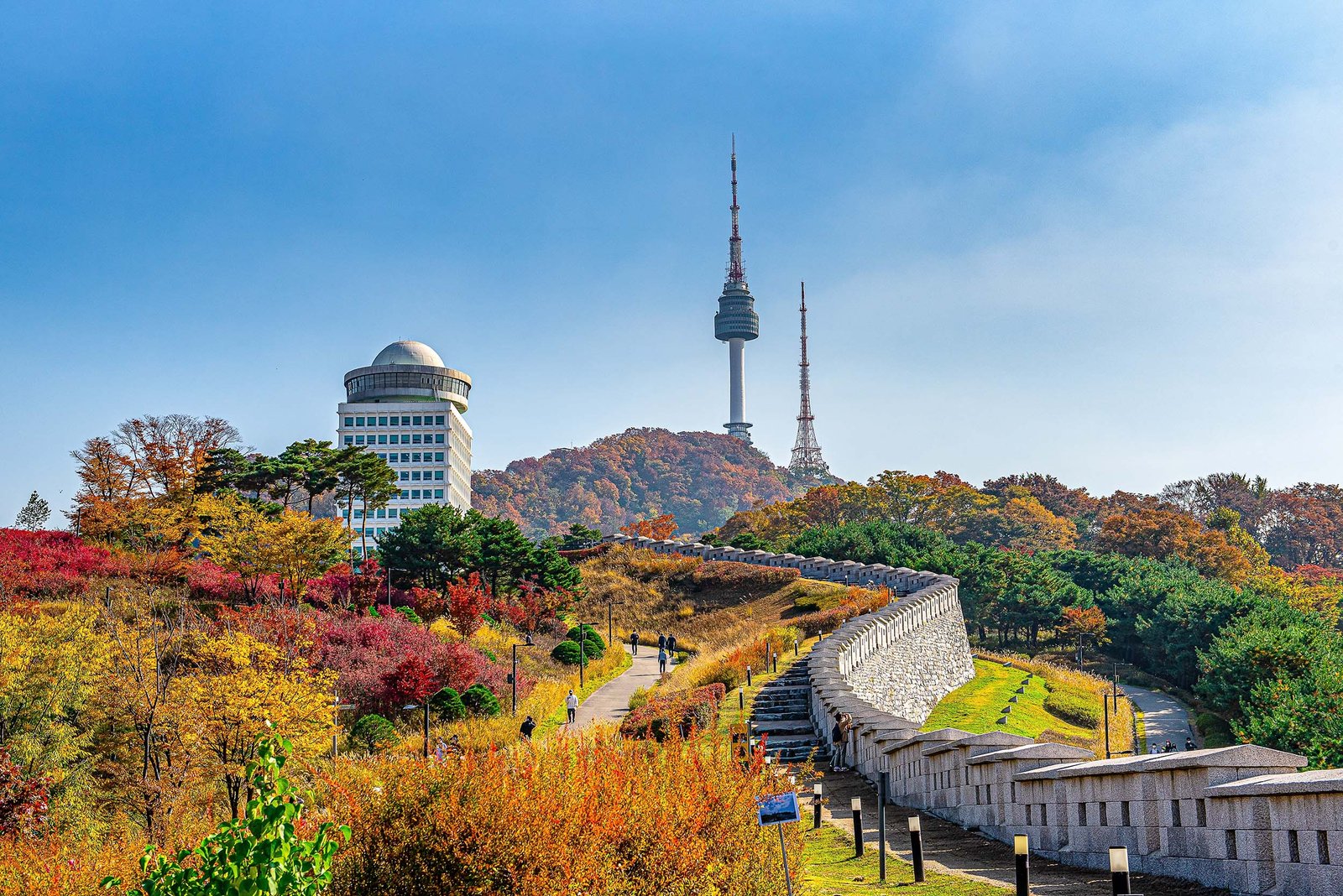
I recall the beauty of Seoul being framed by the views from my 20th-floor suite at The Shilla. The wide panoramic windows unveiled the two sides of Seoul. As I looked to my right, I saw the vast cityscape of the Jung District that glistens in the night and highlights the beauty of the modern metropolis. And, looking to my left, I saw the natural side of Seoul with Namsan Park and the Seoul Tower in the near distance. If you’re looking for a fine dining experience, then there’s no need to leave the hotel as The Shilla has six restaurants – including the Japanese, Ariake, and the Korean, La Yeon.
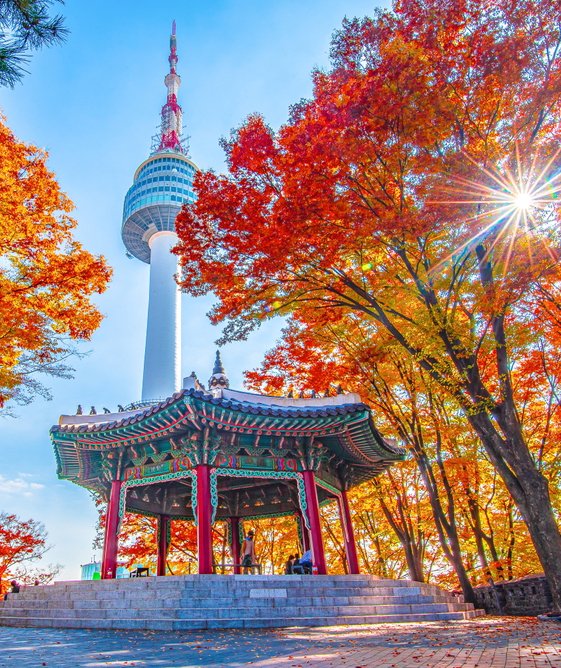
When I revisited the area near The Shilla during my recent trip, I decided to go on a little night hike and try the newly-opened Namsan Sky Forest Trail – an elevated walkway with wooden decks and suspension bridges leading towards the Seoul Tower. It provides the perfect escape as you venture into the forest, with stunning views of the city at night from a quiet viewpoint. The contrast is mesmerising.
Harmony and tradition
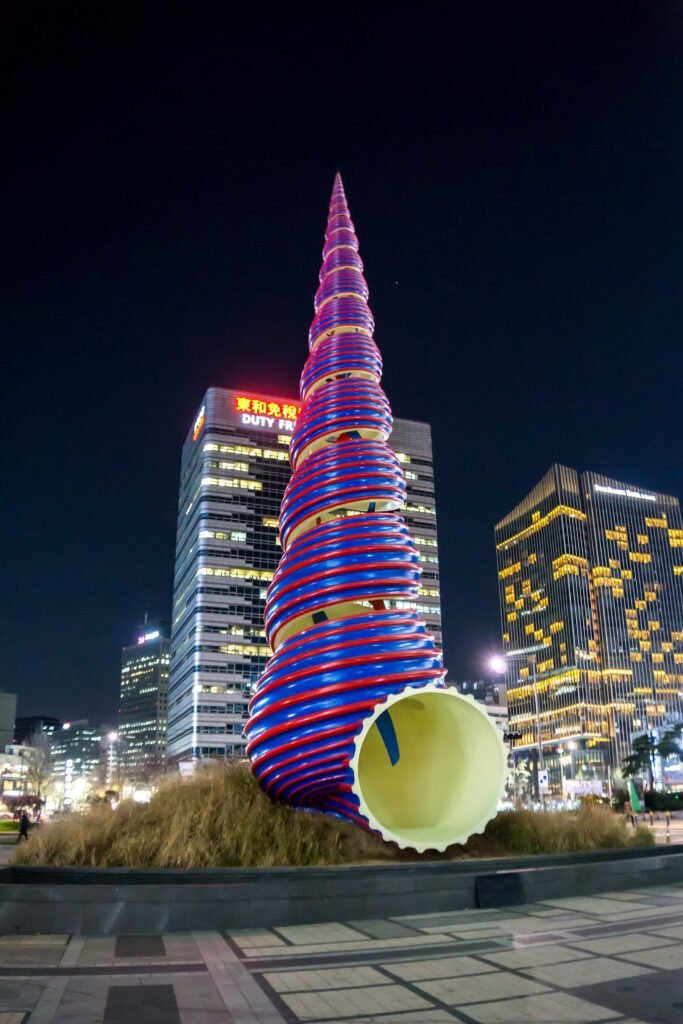
Seoul is a city that’s all about hanging out, snacking on street food and people watching. One of the best places to do this is the atmospheric Cheonggye Plaza, home to one of the city’s most eye-catching landmarks, the Spring Sculpture (below left). Towering above the plaza, this vibrant artwork symbolises renewal and the rebirth of a once neglected area that is now a lively urban oasis.
Created by renowned artists Coosje Van Bruggen of the Netherlands and Claes Oldenburg of Sweden, the sculpture draws inspiration from Korean tradition and natural harmony. Cascading ribbons of bright colour are inspired by the flowing lines of traditional Korean women’s clothing, while the strong blue and red hues reflect the balance of opposing forces found in both nature and the human spirit. Rising skyward in a form reminiscent of a shell shaped like a pagoda, the sculpture stands as a modern emblem of Seoul’s blend of heritage and renewal.
Seoul kitchen
The first time I came to Seoul, I didn’t fully appreciate how dynamic and versatile the food scene was. I might not have been adventurous enough to embrace different foods or just lacked knowledge of hidden gems that were worth visiting. However, this time, I came prepared with a plethora of local hotspots and completely fell in love with the city’s diverse cuisine. I would even go as far to say that Seoul has an affordable and high-quality dining scene that rivals anywhere in the world.
The affordability of the restaurant scene is a big bonus and allows you to explore a variety of different places. Whilst in Seoul, I would dine out twice a day and often socialise with drinks, and still didn’t end up spending too much over the course of a month. If I were living that lifestyle in London, I would be breaking the bank.
I stayed across various districts such as Seongsu, Jongno, Dongjak and Yongsan, which is home to one of the city’s many beautiful parks. This gave me a small glimpse of different cultures and neighbourhoods across the city. I was prepared with several local recommendations and one of my favourite spots was Solsot – which has multiple locations across Korea. I dined at the popular chain in the Seongsu and Jamsil restaurants, and on both occasions ordered the Korean pot rice – sotbap (below right).
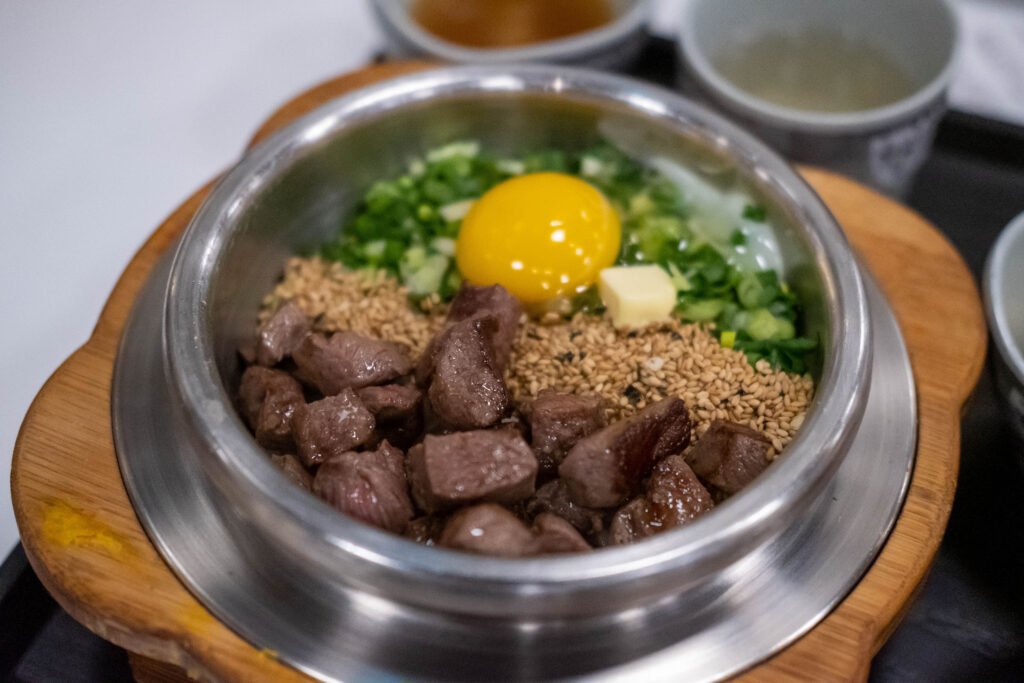
The meal is served in a hot-pot and you start by mixing the steak, eggs, spring onions and rice together before serving it into a separate bowl. The steak was rich and juicy and enhanced by the creamy egg, which brought all the ingredients together nicely. You should pour water into the original hot-pot and close the lid whilst eating your dish. This lifts off the nurungji – scorched rice – on the bottom of the bowl and you enjoy it like a soup afterwards.
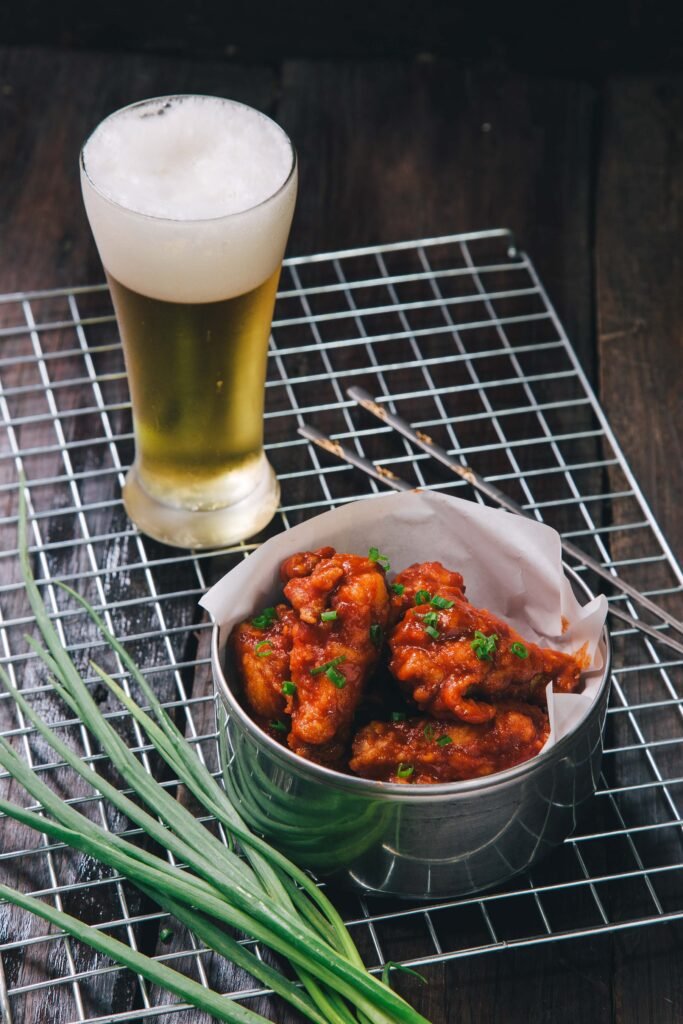
Alongside K-BBQ, another cornerstone of the Korean food scene is Korean fried chicken. The chain recommended by locals was Kkanbu, which had recently made headlines as it was visited by Nvidia CEO Jensen Huang, Samsung Electronics Executive Chairman Lee Jae-yong, and Hyundai Motor Group Executive Chair Euisun Chung.
The pairing of fried chicken and a beer is so popular in Korea that they even have their own word for it – ‘Chimaek’. I can’t think of a better way to socialise with friends than enjoying succulent fried chicken and a crisp, cold beer. And in a city that never sleeps, you can do it whenever you like.
About the author
Adam Davidson is a freelance arts and culture writer with a focus on travel, movies and music. He has contributed to publications including ‘Radio Times’, ‘LA Times’, ‘Boston Globe’ and ‘The Japan Times’.