


Cannes is in the middle of an unmistakable cultural renewal. Visitors still come for the beaches, the cinema and the glamour, but there is a new creative energy in the town. You feel it in the revived art institutions, in the kitchens, and in the talent behind the smaller, thoughtful hotels, doing things their way. The Mondrian Cannes is one of these hotels. With its beautiful gardens and own private beach and restaurant – the iconic Hyde Beach Cannes – the Mondrian offers an oasis of peace amidst the bustle of the Croisette. It is here that I meet Pierrick Cizeron, Executive Chef of the increasingly celebrated restaurant Mr. Nakamoto and its laid-back counterpart Hyde Beach Cannes. His story quickly becomes the centre of this journey through modern Cannes.
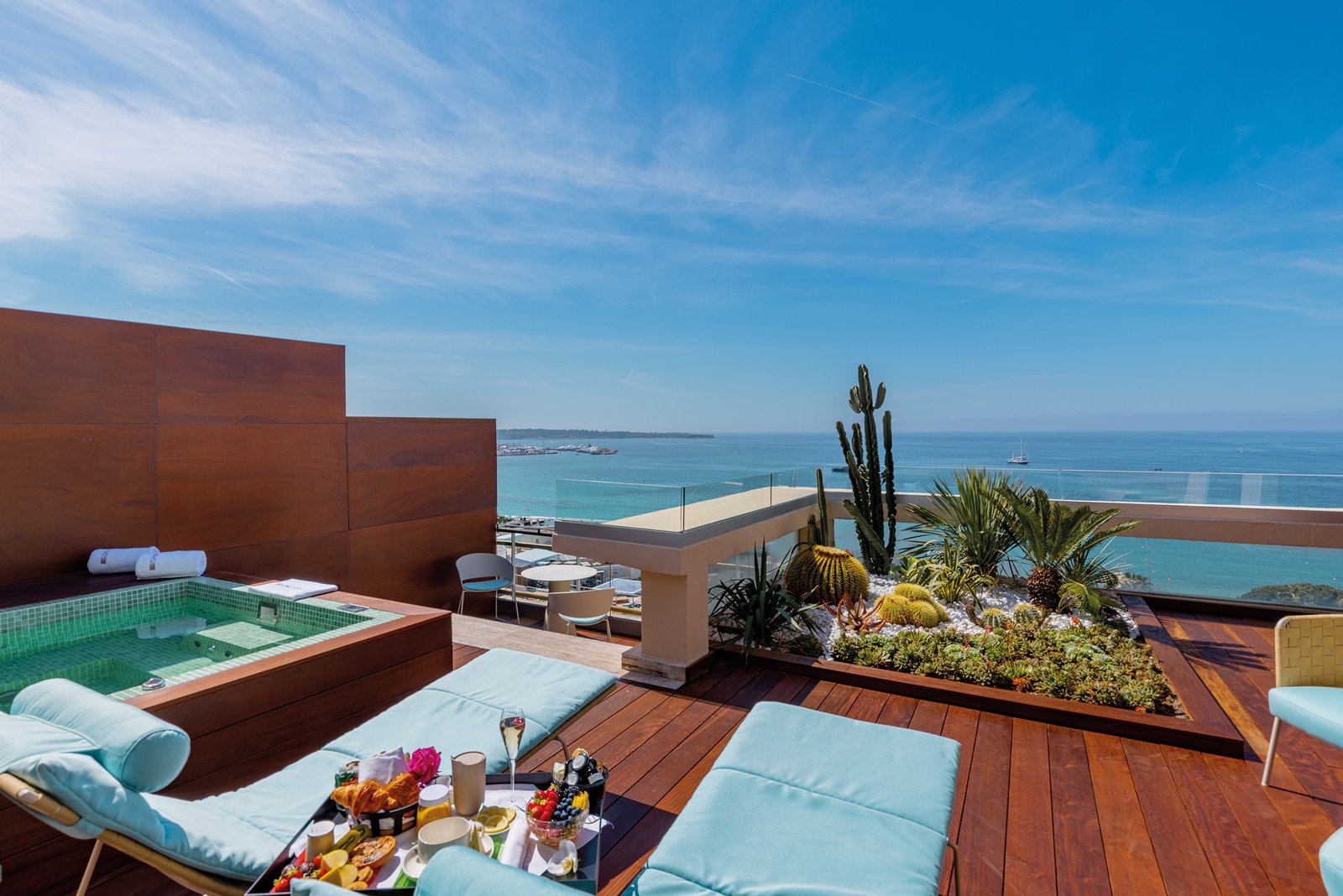
The Mondrian is a boutique five-star hotel with just seventy-five rooms. This gives it an intimacy that distinguishes it from its historic Grande Dame neighbours. Our room on the ninth floor has views that stretch out over the Mediterranean. From the balcony we hear the crash of waves and watch swifts dart to and fro just inches away, and then soar off into the evening sky. In the morning the first swimmers appear and disappear in the water below. The hotel team offer a welcome that is warm and personal. They greet guests as individuals and remember them as such. The building may be contemporary, but the service feels reassuringly old school.
The gardens are what truly set the Mondrian apart. It’s the only Croisette hotel that rolls out this much green space so close to the sea. In the height of summer people drift between the lawns and shaded spots for long breakfasts. Others return later in the afternoon for a quiet hour between meetings or an apéro before dinner. The mood is gentle and unhurried.
Culinary identity
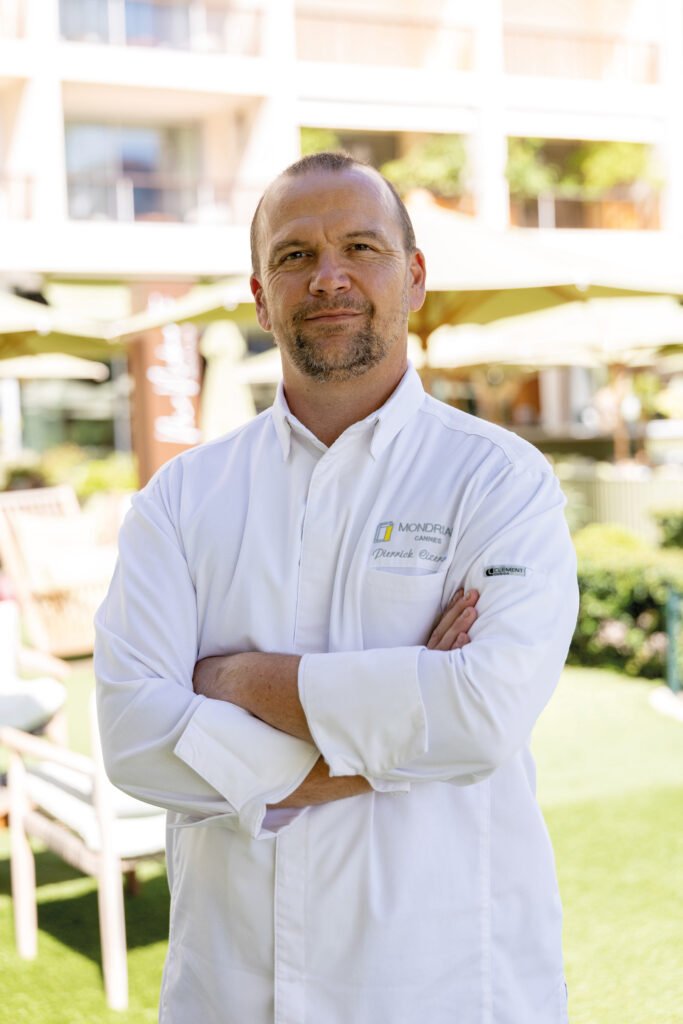
Yet, it is the food that has brought me to the Mondrian. More precisely, it is the chance to speak at length with Pierrick (below). His culinary identity, shaped by years abroad, gives the hotel its defining character.
He begins by telling me about his early life in Saint-Étienne in France. His family were not in hospitality. They ran a garage from their home, which meant that people were always coming and going. Five people for lunch was normal. Fifteen was not unusual. As he explains, “I started cooking when I was five or six because there were always people at the table. My first big meal was for New Year when I was seven. I cooked for the whole family.” He laughs when he remembers how everyone expected him to work with cars or become a racer. “But I always said I wanted to be a chef. The pleasure of cooking for people and seeing their happiness never left me.”
Motorsport never disappeared entirely from his life. He continued racing motorbikes in Dubai where he lived for sixteen years and now, he tells me, he races rally cars in France with his father. “It is in our blood. My father is my co-pilot. My mother used to be as well. It is really a family passion.” These details reveal something essential about him. Precision, endurance and preparation shape both the sport and the kitchen. He is also, rather impressively, an Ironman competitor. “Fail to prepare, prepare to fail,” he tells me. “That is my motto in competition and in service.”
His professional foundations were formed at the Institut Paul Bocuse, although it was Dubai that shaped him most profoundly. “We had 250 chefs from more than 70 nationalities,” he says. “Seeing how much they sacrificed, sending most of their salary home, gave me immense respect. It made me want to lead with kindness and humanity.” His palate widened too. He describes learning Indonesian, Thai, Sri Lankan, and Filipino cuisines not through formal training but through staff meals. “When they cooked for themselves, I always joined them in the kitchen to learn how they really ate at home.” It is a rare insight into a chef who recognises that culinary identity is formed through curiosity and authenticity as much as classical technique.
After sixteen years abroad, Cizeron returned to France in 2017. Cannes felt right. “Cannes is a real bubble,” he says. “Five kilometres away life is completely different. Here you have huge international influence, all types of customers, different cultures and eating habits. For someone who loves this melting pot, it is the perfect place.”
He spent six years at the Majestic, another Croisette hotel he speaks about with genuine affection, before moving to the Mondrian. Here he says he has found a freedom that he had always wanted. “In a boutique hotel, decision making is simple. I can talk to the general manager or the owner in two minutes. Yes or no. It is done. In a big hotel it takes twenty emails and fifty meetings. I removed the word frustration from my vocabulary when I came here.”
From Italy to East Asia
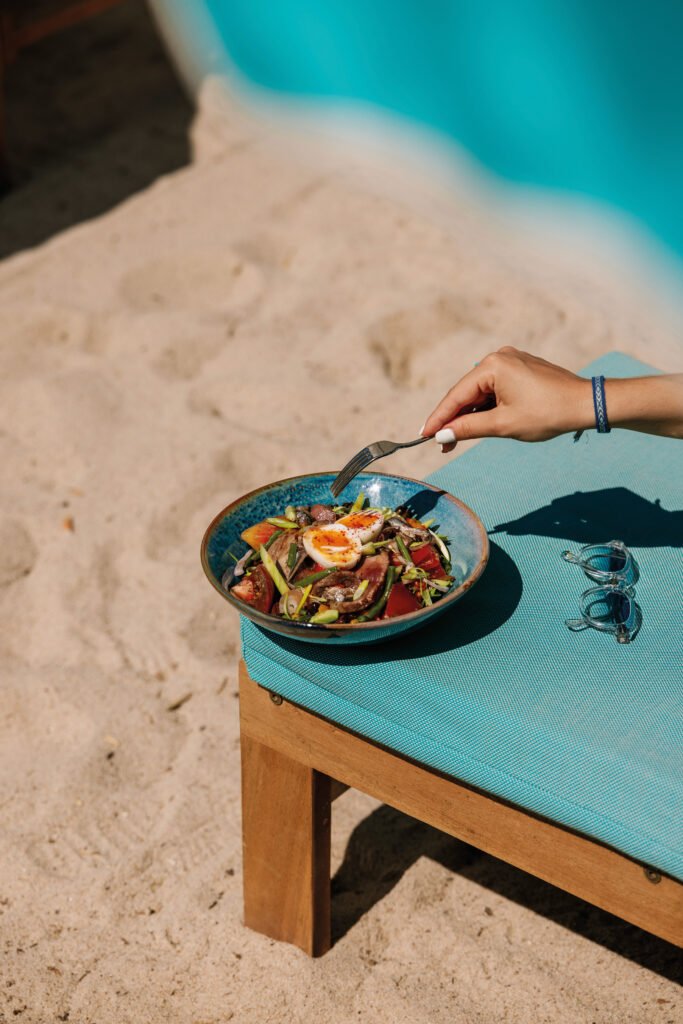
This freedom shows most clearly in the two culinary spaces he oversees. Hyde Beach is his interpretation of the French Riviera through an Italian lens. He and his chefs travel to Italy each year to meet producers and select ingredients that are used exclusively on their menu. The result is food that is simple, delicious and rooted in the quality of its products. It is no surprise that Hyde Beach has become a destination in its own right. Families love the Kids’ Corner where little ones can happily play while parents enjoy a well-deserved spritz in the sun.
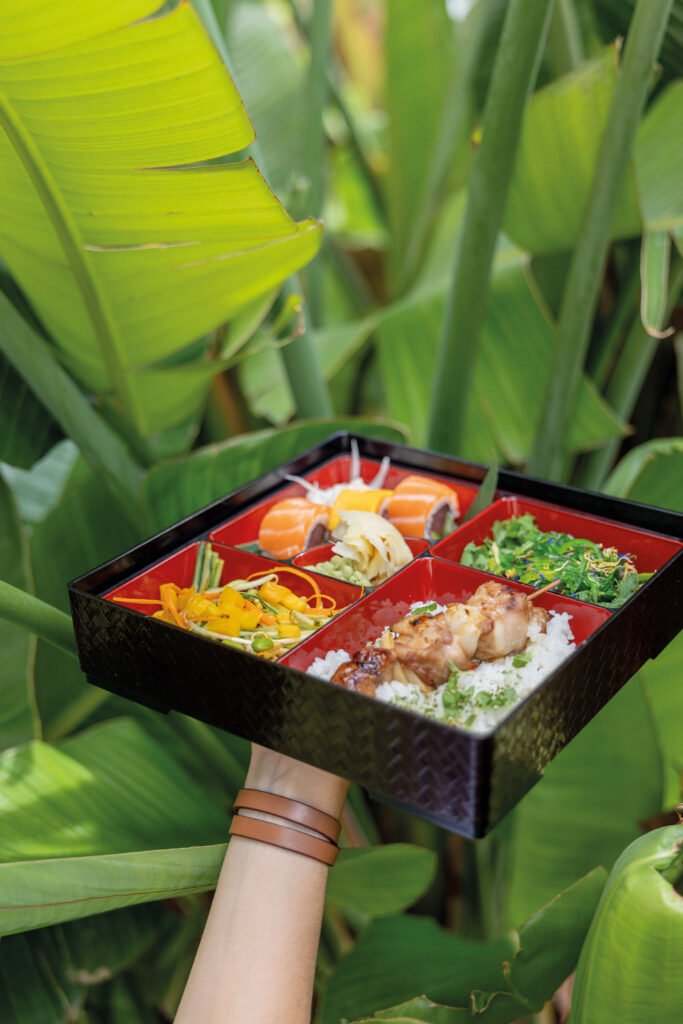
Mr. Nakamoto is entirely different. When he arrived, the restaurant was labelled Japanese, although he immediately challenged that assumption. “I told the owner it was not Japanese at all. But I believed in the idea of an Asian concept because there were not many competitors in town.” What he created instead is a personal interpretation of modern Asian cuisine with influences from Japan, Korea, Indonesia, the Philippines and India.
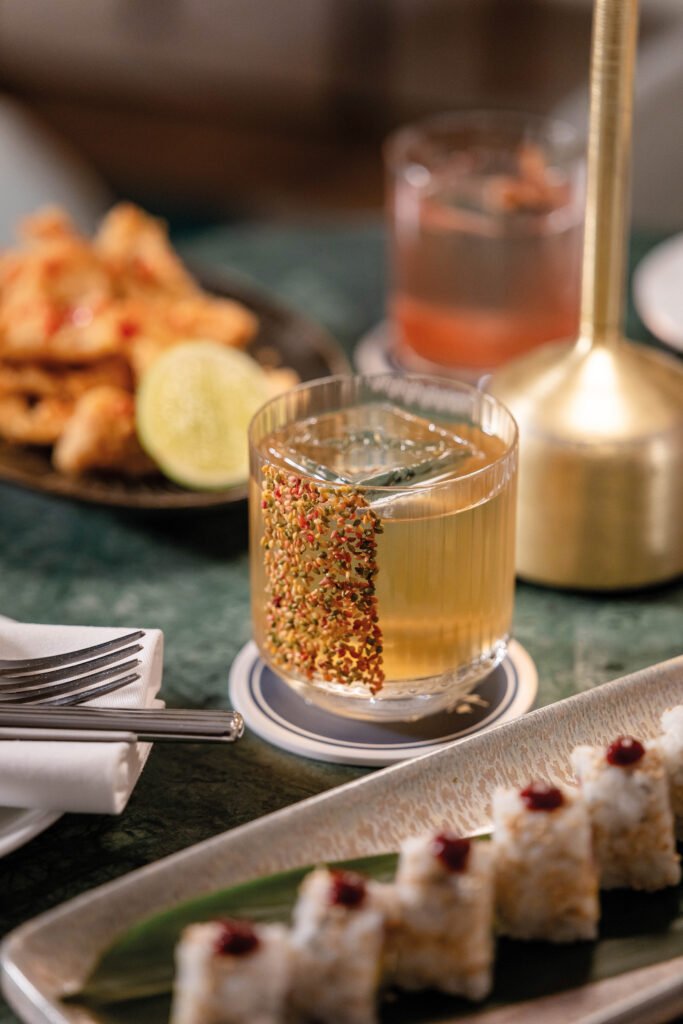
During our dinner this philosophy becomes clear. The restaurant’s black cod, marinated in miso and yuzu, reveals immediately why it is the house signature. The steamed bao buns with duck leg confit and hoisin sauce are soft, warm and deeply savoury. Desserts are delightful. Kurimu, a light egg custard with red timut pepper, almonds and red berries, is surprising and dangerously moreish. The drinks list includes a strong menu of Japanese whisky and sake, including a sparkling sake that is slightly sweet and very enjoyable.
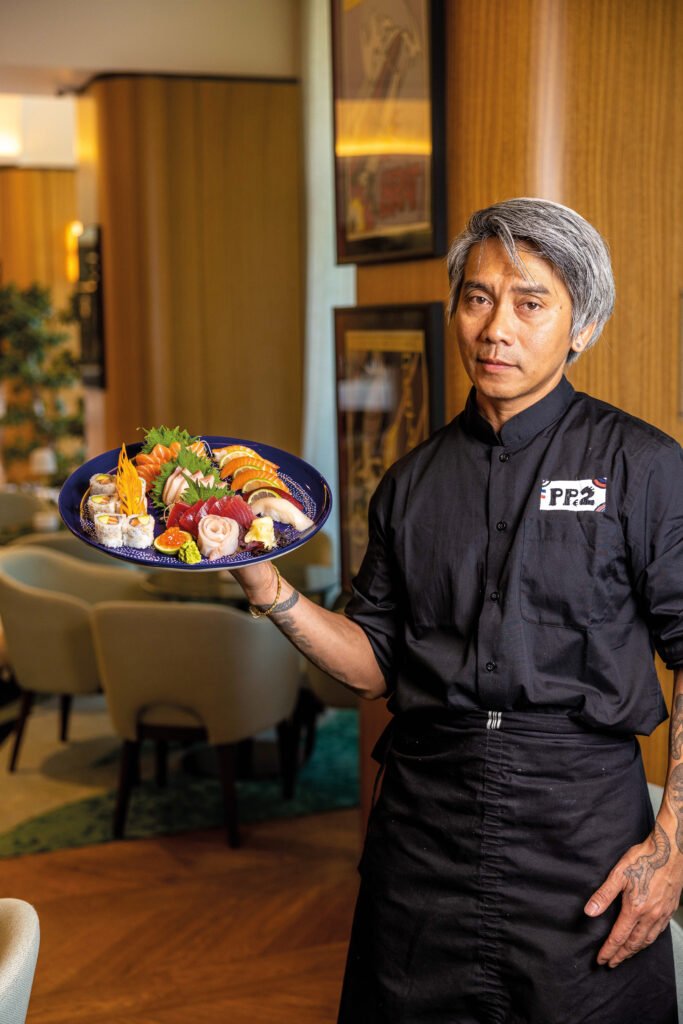
Chef Cizeron and I turn to the broader culinary scene in Cannes. When he first arrived, he struggled to recommend restaurants. “Now I can give five addresses immediately,” he says. “Quality has really improved. There is more creativity, more diversity.” He speaks with genuine enthusiasm about a lunch he recently organised with all the chefs of La Croisette. “We want to build a community, to support each other and collaborate. That is something I loved abroad and I want it here too.”
This sense of cultural renewal extends beyond the kitchens. The Mondrian has an exclusive partnership with La Malmaison, a Belle Époque villa, that has been restored as a contemporary art centre, steps away from the hotel’s gardens. Guests receive complimentary access to its exhibitions. During my stay I visited ‘Poussière d’étoiles’, Jean-Michel Othoniel’s exhibition inspired by the cosmos. La Malmaison has been part of Cannes since 1864, formerly part of the Grand Hotel, on which the Mondrian now stands. Its reopening, with a mission to elevate the city on the global art scene, is central to this new chapter. Three major exhibitions are planned each year and the centre is expected to welcome more than eighty thousand visitors annually. Dance too is taking centre stage. The Cannes Dance Festival may have first leapt into the spotlight in 1984, but its popularity has surged in recent years. Last November’s edition welcomed 24 international companies and presented both French and world premieres, spanning every imaginable form of dance.
Departing Cannes, and driving back along the coastal road to Nice, I think about Pierrick Cizeron’s extraordinary journey. From a child who cooked for fifteen people at a family garage, to a young chef shaped by global kitchens. A man who races rally cars and completes endurance competitions. An innovator who has finally found a place that gives him space to create without compromise. His story mirrors the city around him. Both are rooted in history, influenced by global perspectives and stepping into a new era. Cannes feels different now and in the gardens of the Mondrian you can sense that a fresh identity is emerging.
Further information
mondrianhotels.com/cannes
About the author
Rebecca McVeigh is a French Riviera-based travel writer and producer. She’s worked for the BBC, ‘The Sunday Times’, ‘France Today’, and ‘Fodor’s’, among others. Check out Rebecca’s adventures on her trip to Saint-Paul de Vence here
All images © Cedou