



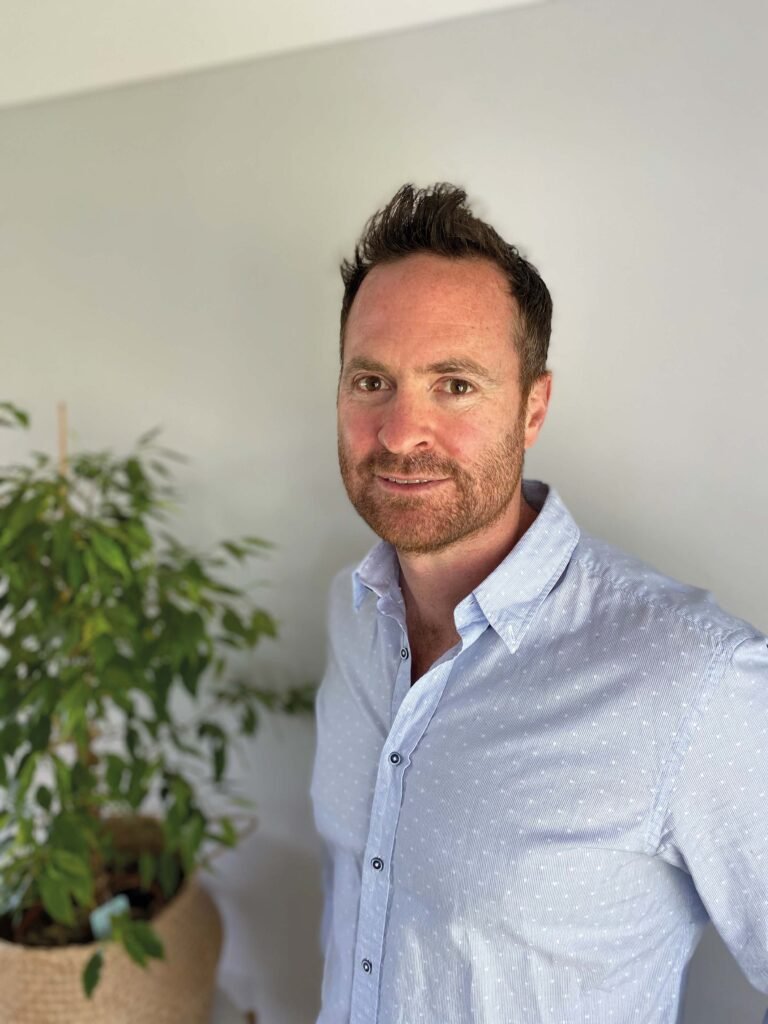
As CEO and Founder of flytta, Adam McVicar (below right) brings more than 25 years of experience scaling and operating businesses, from startups to multimillion-pound P&Ls across the UK, EMEA and beyond. Today, he is focused on reimagining the future of private aviation, starting with a world-class service between London and Nice.
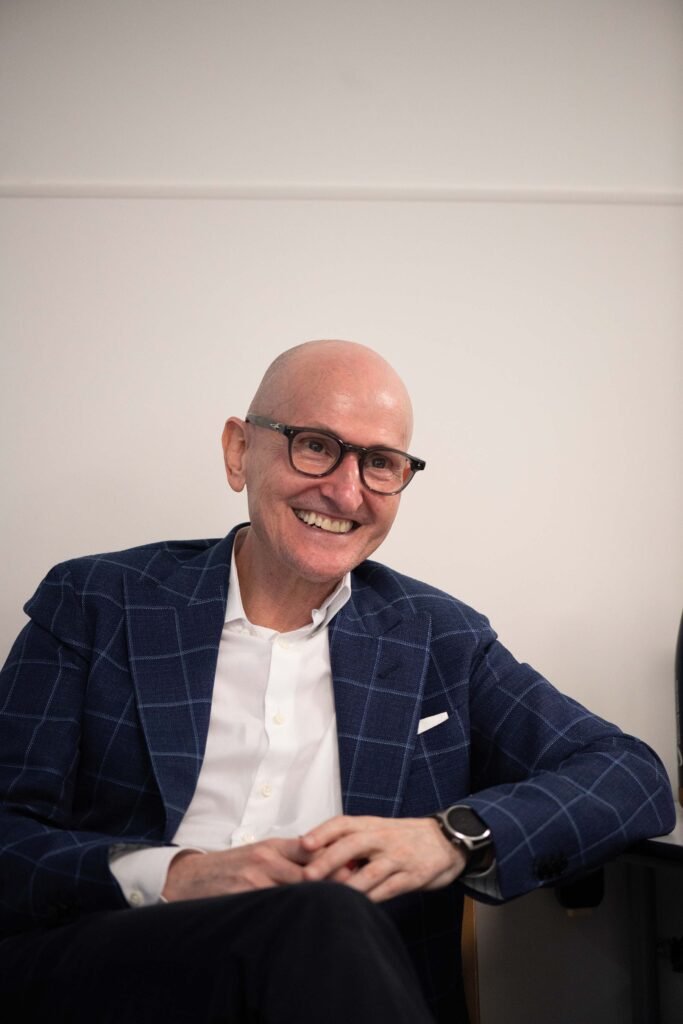
In conversation with him is Professor Dr Phil Klaus (left), a globally recognised customer experience strategist, academic and co-founder of Lexden Luxe. His award-winning research into ultra-high-net-worth (UHNW) individuals has shaped how many of the world’s leading luxury brands understand, attract and retain their most discerning clients.
For The Luxury Report, Klaus leads a wide-ranging discussion on the future of business aviation, exploring how changing customer expectations, technology and service are reshaping the sector.
flytta.me positions itself as the future of business aviation. What does the flytta experience look like?
Adam McVicar: The simplest way to describe it is that we’ve removed everything people find frustrating about flying and kept everything they love. Even in business class, the experience is still defined by queues, shared terminals and a system optimised for volume rather than the individual. You’ve paid a premium, but it doesn’t always feel like a premium experience. It feels like economy with slightly more leg-room.
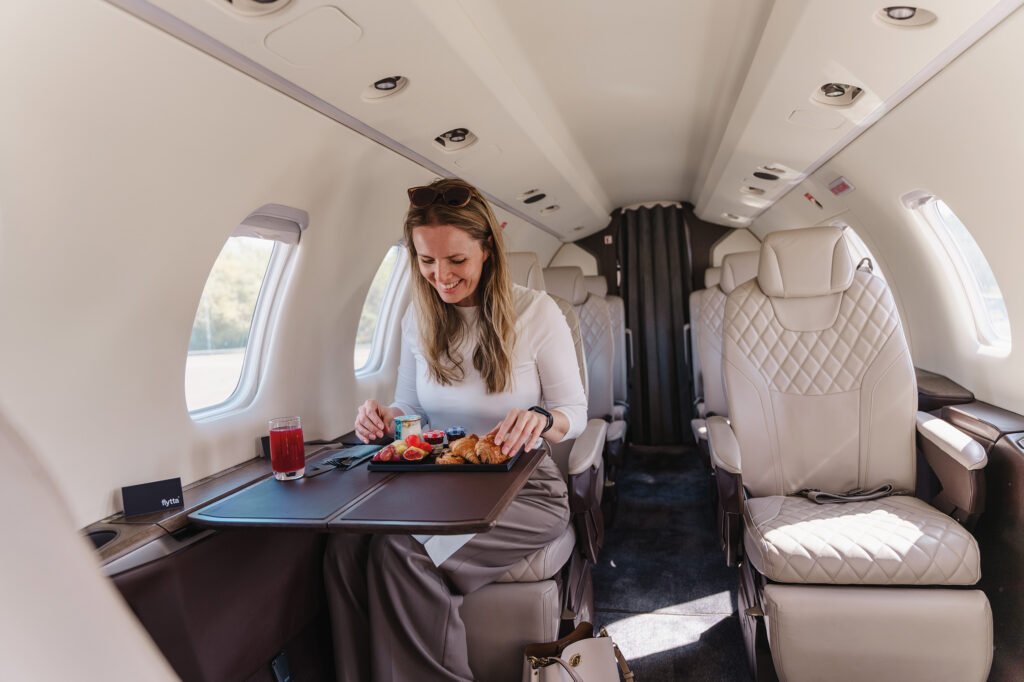
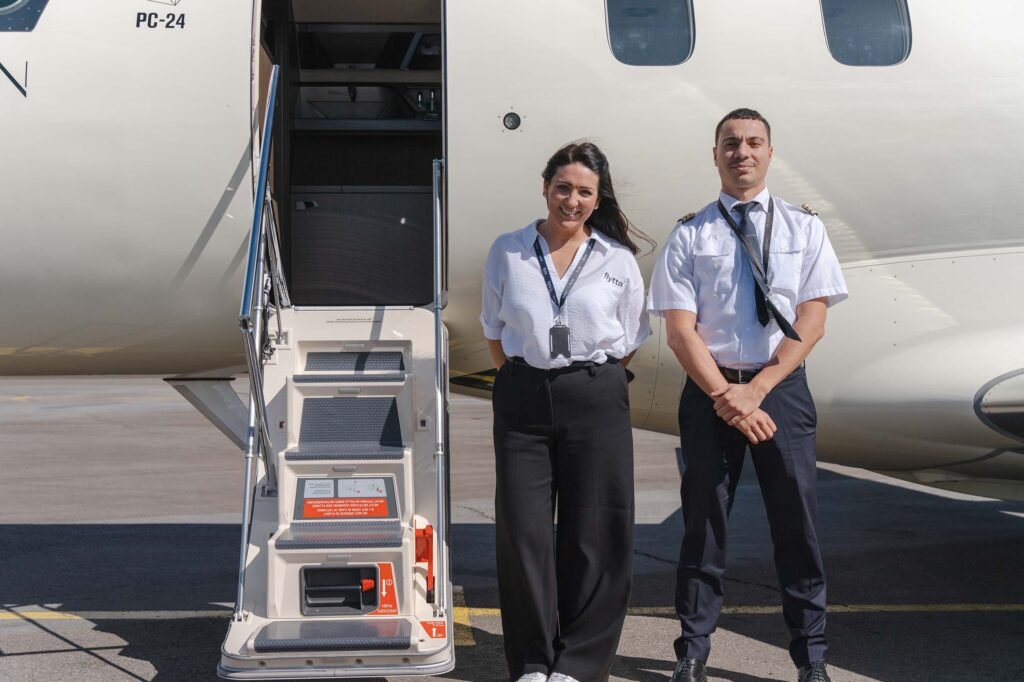
With flytta, you arrive at a private terminal twenty minutes before departure. There’s no queue. No conveyor belt for your shoes. Our concierge greets you by name, you walk to the aircraft, a Pilatus PC-24, which is a genuinely beautiful Swiss engineered jet with a BMW Designworks interior, and you’re in the air before business class passengers have finished boarding. Our UK base is London Blackbushe, a private airfield, not a commercial hub. No departure chaos or arrival scrum either. Door to door, you’ve saved two to three hours. But the real difference isn’t the time. It’s that you arrive feeling like a human being rather than a processed unit.
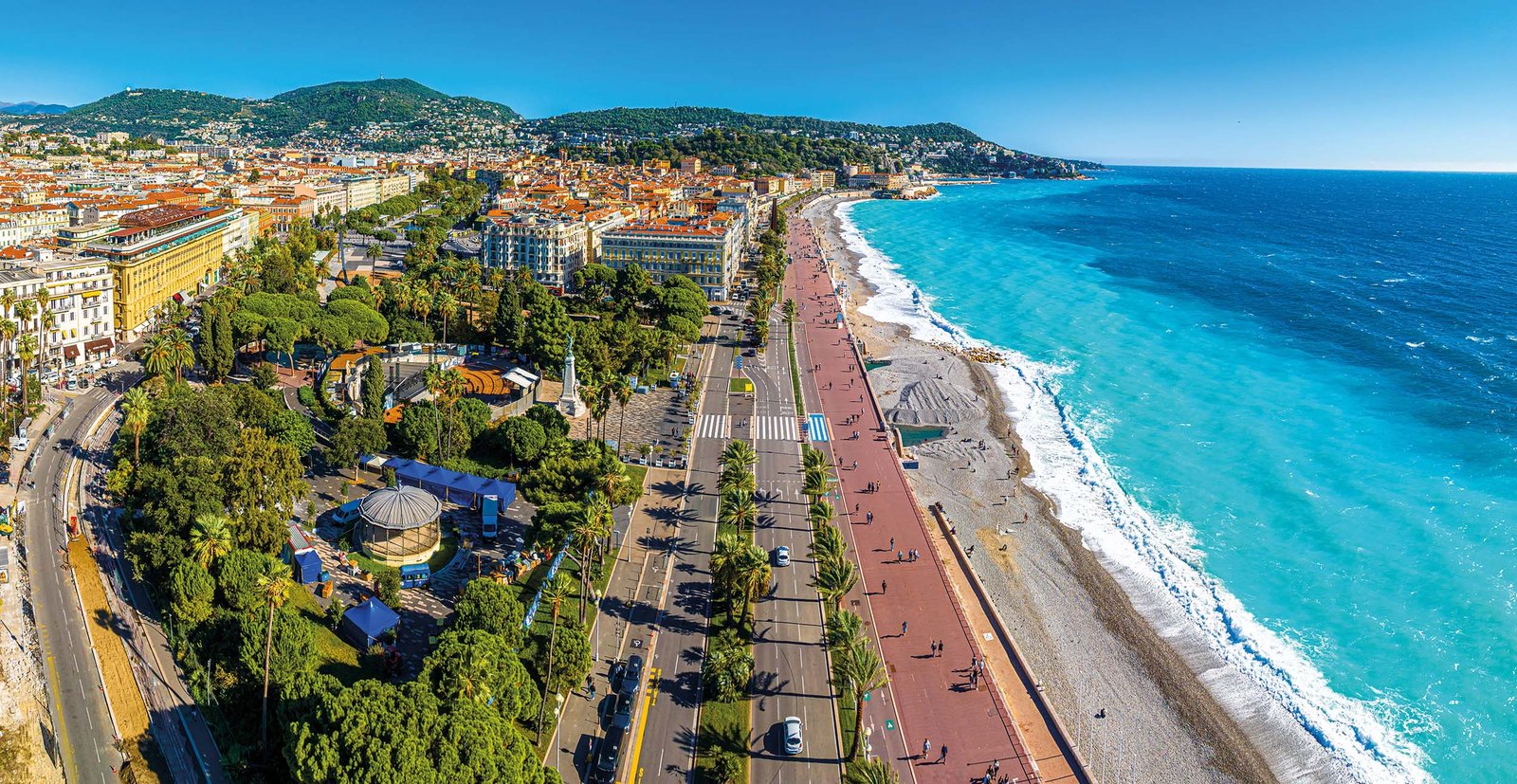
The Côte d’Azur and Monaco are iconic endpoints. Is that what makes London to Nice so compelling for business aviation?
AM: Absolutely, it is possibly the most interesting short haul route in European aviation. At one end you have Monaco, the French Riviera, a density of UHNW individuals, yacht owners, family office principals and fund managers who genuinely treat the south of France as a second operational base. At the other end, you have the City and Mayfair, London’s financial and professional core. It’s not a holiday route. It’s a commute for a very specific kind of professional.
And here’s what makes it perfect for what we do: the distance is short enough that chartering a full jet feels slightly absurd. You’re paying nine to twenty thousand pounds for ninety minutes of airtime. But commercial business class on this route is genuinely underwhelming. Nice airport in season is chaos. So, there’s a very real gap: people who need to move between these two points regularly, who value their time and their sanity, but for whom full charter is either wasteful or philosophically misaligned with how they think about spending. That’s our sweet spot.
Corporate travel managers are increasingly being asked to optimise not just travel spend, but executive effectiveness, wellbeing and time value. When you engage with them, is flytta positioned as a premium travel product, or a different mobility model altogether?
The honest answer is that we’re reframing the conversation entirely. Travel managers are trained to think in terms of cost per ticket. Fair enough, that’s their job. But if you only measure the ticket, you miss the real cost of commercial travel: the three hours lost at the airport, the executive who arrives cognitively drained, the meeting that doesn’t go well because someone spent the morning in a security queue at Heathrow Terminal 5.
We’re not positioning this as an upgrade from business class. We’re positioning it as a tool for performance. A CFO flying to Monaco for a board meeting doesn’t need a wider seat. They need to arrive sharp, composed, and ready to perform. That’s what we deliver. The conversation with travel managers becomes much easier when you frame it as ‘what is the cost of your CEO arriving tired?’ Rather than ‘would you like a nicer seat?’ We’ve built a Business Mobility programme with tiered corporate partnerships precisely for this reason. It’s designed to make the commercial case as clear as the experiential one.
Discretion and ease have become defining features of modern luxury – it’s what many describe as ‘quiet luxury’. How does that translate into aviation, and what signals suggest your clients increasingly favour subtlety over more conspicuous luxury?
AM: Our passengers don’t want theatre. They don’t want to be greeted with a red carpet or a trumpet fanfare. They want to arrive, sit down, fly, and get on with their day. The quiet signals matter: the fact that our cabin holds only eight people, not two hundred. The fact that nobody asks you to watch a safety video on a screen while selling you duty free perfume. The fact that your bag is in your car forty-five seconds after landing. Discretion, in this context, isn’t about secrecy. It’s about not being subjected to unnecessary noise.
Clients increasingly see the journey as one seamless experience. How do you maintain that continuity when so much lies outside your control?
AM: This is the hard part, and I won’t pretend we’ve cracked every element. Aviation has a lot of moving parts that no single company controls. Weather, ATC, ground handling, border formalities. What we can control, we obsess over. Our concierge team manages the ground experience at both ends. We partner directly with operators rather than brokering. That’s a deliberate choice, because it gives us much tighter quality control over the inflight product. We use London Blackbushe precisely because it’s a small, efficient airfield where we have genuine relationships and can manage the arrival experience properly.
The philosophy is that the journey starts when you leave your front door and ends when you arrive at your destination, not just the bit where you’re at 40,000 feet. Anyone can serve good champagne on a nice aircraft. The question is whether you’ve thought about what happens before and after.
Executive mobility now sits at the intersection of organisational performance and employee experience. How do you ensure corporate priorities such as reliability and governance enhance, rather than compromise, the traveller’s experience?
AM: There’s a lovely tension there, because what the company needs, duty of care, reliability, budget control, and what the individual wants, comfort, speed, dignity, are perfectly aligned in our model. The Business Mobility programme we’ve built addresses the corporate side directly: tiered pricing, volume commitments, flexible rebooking, name changes. It’s structured so that the CFO and the travel manager can both say yes.
From a duty of care perspective, putting your senior leadership on a private terminal flight with eight passengers and a dedicated concierge is arguably a stronger proposition than sending them through a commercial terminal with forty thousand strangers. The risk profile is simply better.
Is private aviation benefiting from this shift in what clients value most? Are you seeing decision makers actively choosing not to acquire fractional ownership or time on a private jet because an experience-led model is more aligned with how they now think about value?
AM: Enormously. I think this is the structural tailwind that makes the whole sector viable. Ten years ago, the question was ‘should I buy a jet or a share in a jet?’ Today, for a growing number of sophisticated individuals, the question is ‘why would I own a depreciating asset that sits on the ground 95% of the time when I can simply buy the outcome?’
We’re seeing decision makers who could afford fractional ownership actively choosing not to, because they’ve done the maths and they’ve thought about the reality. Crew management, maintenance schedules, repositioning costs, hangarage. It’s an operational headache dressed up as a status symbol. Our model gives them the result, a fast, private, comfortable journey, without the obligation. It’s the Netflix model applied to aviation: access over ownership.
If you were speaking directly to a Chief People Officer or Head of Executive Travel evaluating mobility for senior leadership, what is the one misconception you would challenge? And what should they understand about the relationship between travel experience and executive performance?
AM: That the way your leadership travels is a statement about how much you value them. Not the ticket class. The experience. If your CEO arrives at a critical meeting having spent three hours in an airport, that’s not a travel choice. It’s a performance decision. And probably the wrong one.
flytta exists to make private aviation both accessible and justifiable for regular use. From £2,950 per seat, your most important people can travel in a way that protects their time, their energy, and their ability to perform. That’s not an extravagance. It’s an investment in the people who drive your results.
Discover more
flytta.me