


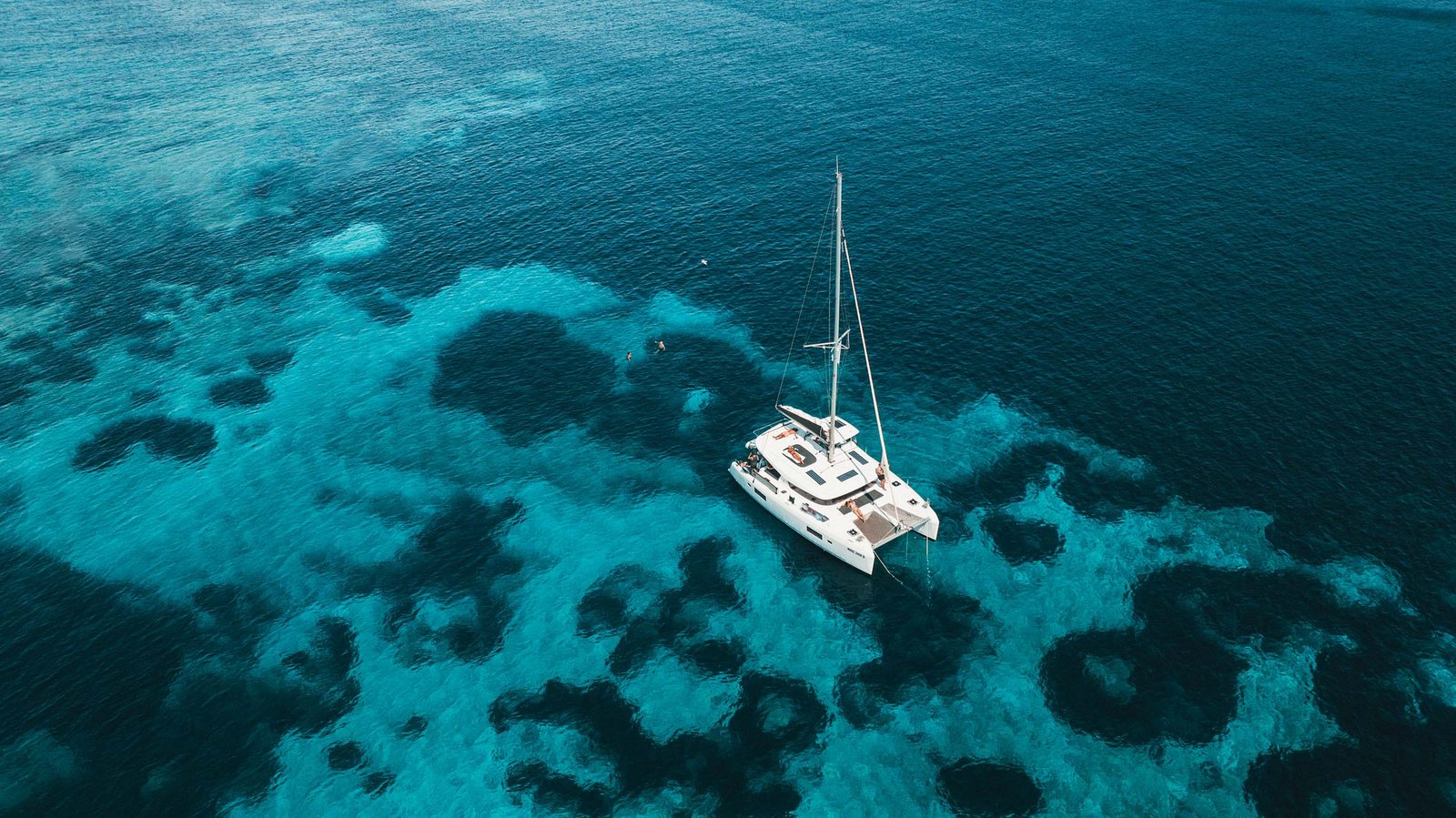
I have eaten in Split. I have swum off Hvar, and I have threaded my way through the crowds boarding ferries for the islands many times. But I had never sailed the Adriatic coastline for more than a day, and spending several days under sail is a very different experience. These towns were built to be arrived at by water, with bell towers and fortress walls facing the sea. From the bow of a boat, they reveal themselves slowly, just as they have done for centuries.
The logistics couldn’t be simpler. Fifteen minutes in a taxi from Split airport to Trogir Marina (Uber offered a much better price) and there, on the pontoon stood our captain, Julius Rothschild. Young, quietly confident, and reassuringly experienced, he made the introductions, stowed the bags, and before we had finished our first glass Trogir’s bell towers were already shrinking behind us. Trogir is a tiny UNESCO-listed island town of Venetian stone squeezed between the mainland and the marina, and the best view of it is from the water.
More Sailing is Swedish, founded in 2009 by Einar Halldin and Malin Stom after a one week sailing holiday in Croatia stretched, tellingly, into seven. The company has grown from a small operation on the Swedish west coast into one of Scandinavia’s leading sailing travel brands, with a fleet of more than sixty boats and its own marinas in Croatia and Greece. Last year it carried a record 2,799 guests on crewed trips and holds a 4.9 Google rating, which in travel is bordering on showing off.
The premise is generous and flexible. No sailing experience required. A professional skipper and host handle everything, from navigation and safety to meals and the day’s route, and you can do as much or as little as you please.
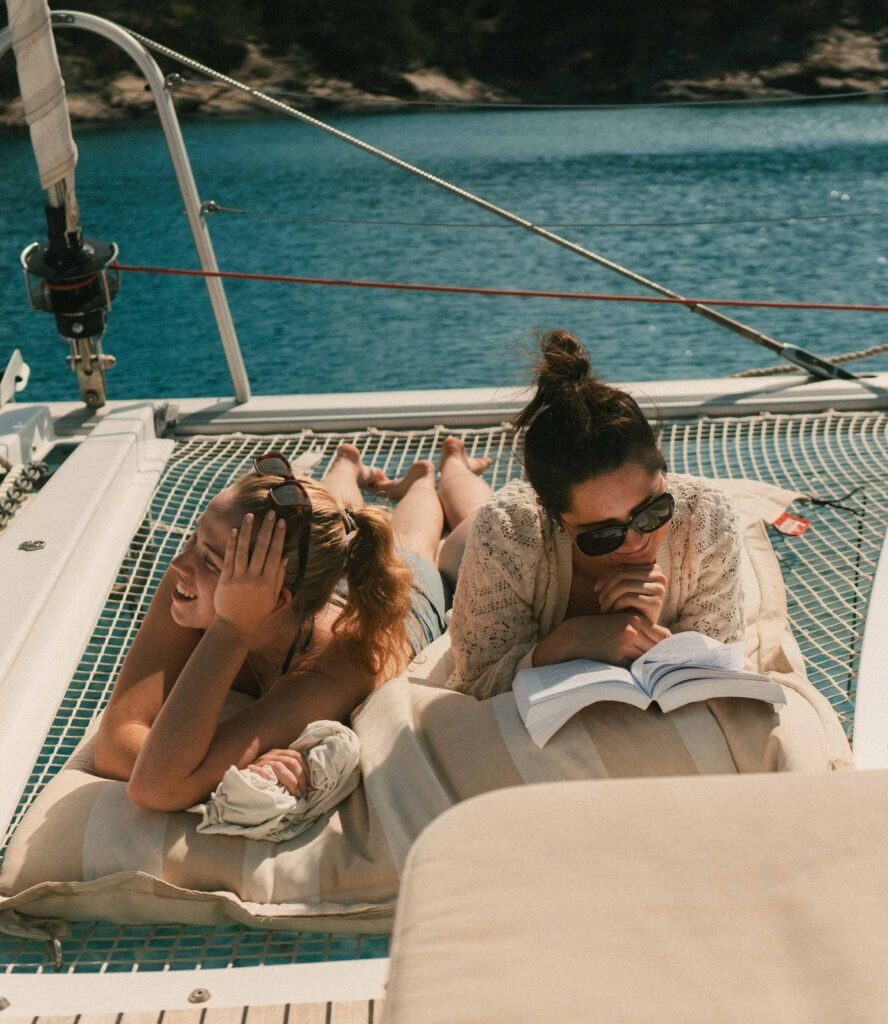
We did quite a lot. Julius encouraged everyone to take the helm, trim the sails, drop the anchor and plot the day’s course on the chart at breakfast. Steering eight tonnes of catamaran towards an island you can’t yet name – with the autopilot off and the captain quietly pretending not to watch – is equal parts challenge and thrill, particularly on a day of sunshine and big blue skies. By day three there were arguments over whose turn it was at the wheel, which I suspect is exactly what Julius intended. Sailing can feel like a members-only club, all jargon and raised eyebrows. Not on this boat. The wheel was yours if you wanted it, and if you would rather lie on the trampoline with a book, soaking up the sun, nobody came looking for you to take over the helm.
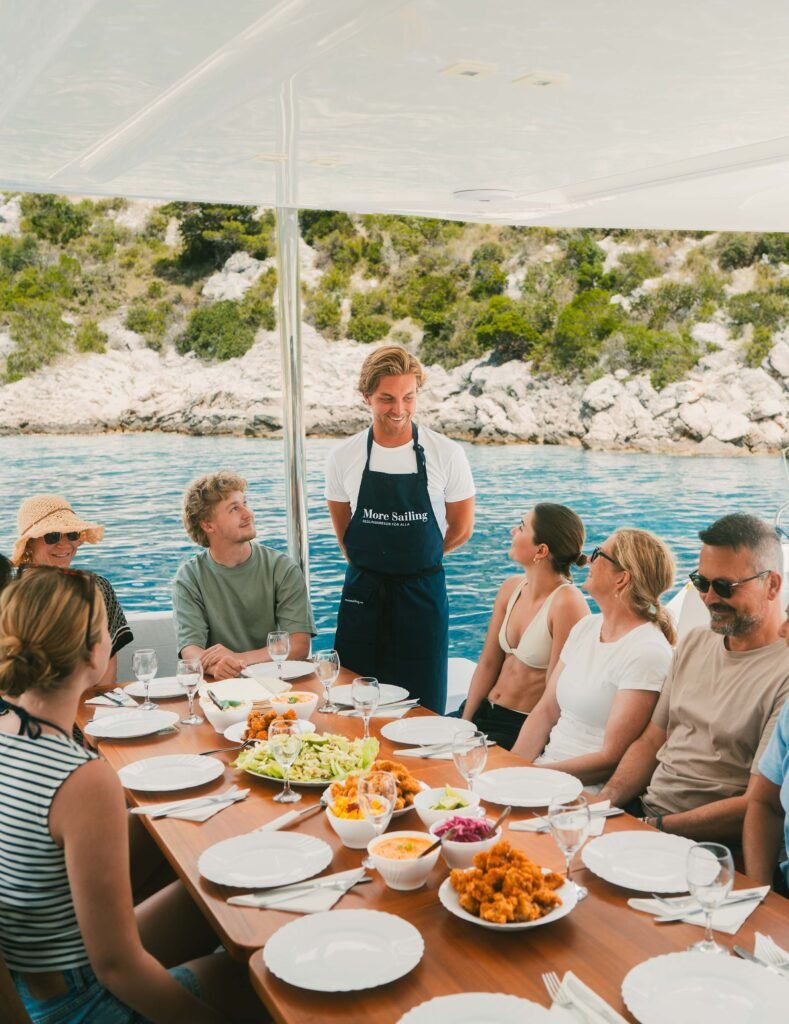
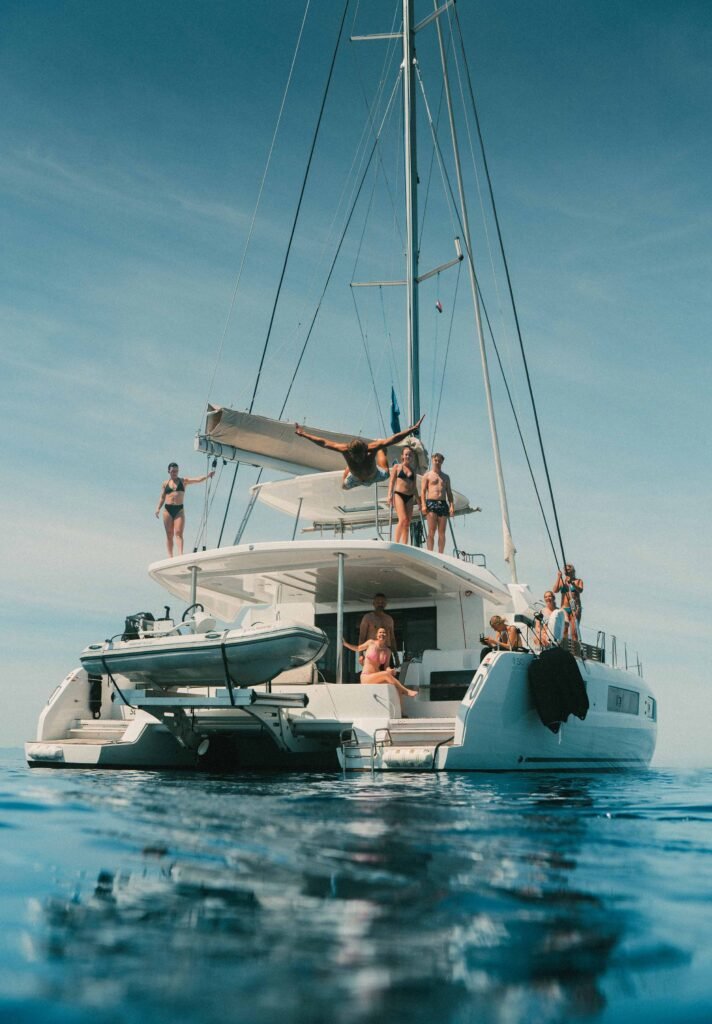
Lunch at anchor
Then there was the food. Our hostess, Julia Wendenlin-Lowndes, made it all look easy from a galley the size of a wardrobe. Breakfast appeared on deck each morning before anyone had properly woken. Warm bread, soft cheeses, fruit, yoghurt, a charcuterie board, strong coffee. Lunch arrived at anchor in whichever bay Julius had chosen for the swim stop. Think large, refreshing salads and grilled fish eaten in swimwear with salt still drying on our shoulders. Julia soundtracked it all with Scandinavian music none of us knew and have all since added to our playlists. The fridge was stocked with soft drinks, wine and beer, all included, so no bar bill at the end of the week. Dinner is the one meal you pay for yourself, taken ashore in harbour villages the crew know intimately, with plenty of recommendations. They’ll point you towards a konoba, steering you gently away from the restaurants with laminated menus. A traditional Croatian tavern, a konoba is the Dalmatian and Istrian equivalent of an Italian trattoria, where the owner grills the morning’s catch over vine cuttings, and serves it with cold, local wine, at tables close enough to the water to hear it.
By the second morning we had our routine. A swim off the stern before breakfast, while the bay was still cool from the night. Coffee on the foredeck. Sails up by late morning. Lunch and a long swim at anchor, then a slow afternoon sail towards the evening’s harbour, snacks passed around while Julius told us about the next island. Dinner ashore. This is my kind of luxury, early to bed and a deep sleep, the hull rocking just enough to help. One afternoon a pod of dolphins found us and stayed, leaping and turning alongside the hulls for what felt like an hour but was probably ten minutes. We were so thrilled at the sight that nobody reached for a phone until it was almost too late! The water here is so incredibly clear that you can count the sea urchins ten metres below from the deck.
Effortless island hop
The classic route runs Saturday to Saturday from Trogir. First to Šolta, quiet and olive-groved, the island Split locals keep for themselves. Then Brač, home of the white stone that built half of Dalmatia and the famous horn of beach at Zlatni Rat, which shifts its shape with the wind. Hvar next, for lavender, Venetian squares and the nightlife, if you want it. We wanted a little of it, then retreated to the boat, which is the great luxury of sailing – the party is optional.
Vis was the revelation. Closed to foreigners for decades as a Yugoslav military island, it missed the development boom entirely and is all the better for it. Green and unhurried, we ate in a vineyard, drank the island’s speciality, Vugava, and wondered why anyone even considers stopping at Hvar. Then the Pakleni Islands on the way home, a scatter of pine-covered islets with lagoon-blue channels between them, and finally the sail back to Trogir.
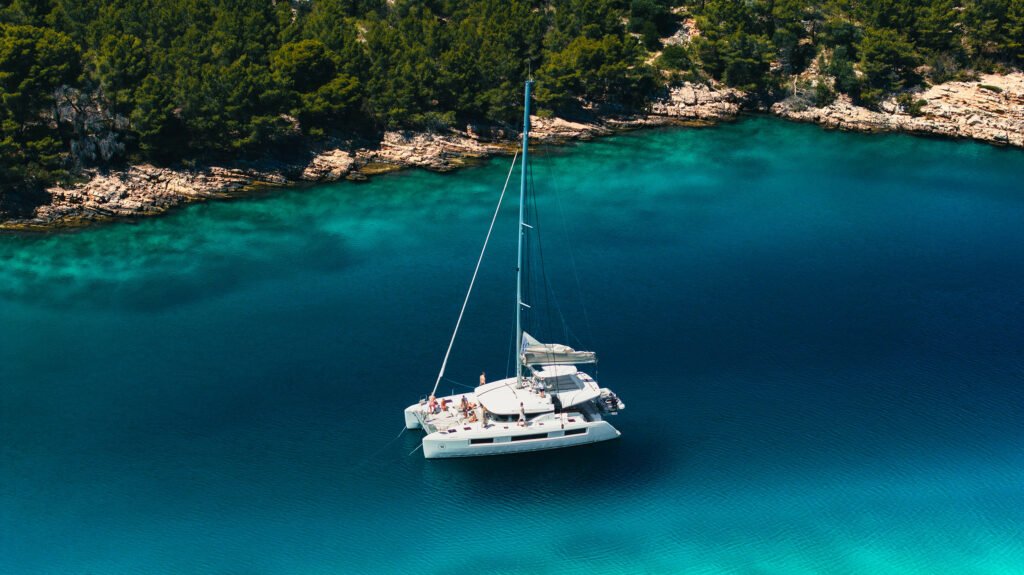
A word on the boat. Our catamaran slept eight in real comfort, four proper cabins with bathrooms, two hulls, and a saloon and cockpit that flow into one another so the group is always together without ever being on top of each other. A catamaran barely leans, which quickly reassures even the most nervous guest, and the trampoline nets at the bow are where everyone ends up, all week. It’s the ideal arrangement for two families or a group of friends.
Life’s a breeze
A sailing holiday is also a light one. The wind does a lot of the work, the food comes from local markets, dinner keeps the harbour restaurants in business, and there’s no buffet the size of a football pitch. Nobody on board has to give any of it a thought, making it a proper holiday.
The completeness stays with you. The price covers the skipper and host, breakfast, lunch, snacks and drinks aboard, bed linen and towels, and every fee you would otherwise be ambushed by – marina charges, fuel, taxes, the lot. Return flights are included too, from Stockholm, Gothenburg, Oslo, Copenhagen, Frankfurt, Düsseldorf and London Gatwick, with a checked bag and the transfer to the boat. Book without flights and €320 comes off the price. One booking and it’s all done, which for a week involving eight people and an international border is not nothing. Evening meals ashore and whatever you buy in the harbour shops are the only extras, and honestly, the konoba dinners are very much part of the experience.
Einar Halldin’s philosophy, that happy crew make happy guests, is the sort of line founders love to say. On this boat, with Julius at the helm and Julia in the galley, it happened to be true. I stepped off the pontoon at Trogir already planning the Ionian.
Discover more
Crewed sailing trips with More Sailing usually run for seven days, from approximately €1,600 per person. This includes return flights with one checked bag and transfers from Stockholm, Gothenburg, Oslo, Copenhagen, Frankfurt, Düsseldorf and London Gatwick. Travelling without flights takes €320 off the price. Evening meals ashore are extra. The team operates in Croatia and Greece, April to October, and the Caribbean, November to March. Bareboat charter available for experienced sailors.
About the author
Lulu Townsend has been immersed in the world of luxury hospitality for over two decades transforming her family’s boutique property in Umbria into a Condé Nast Traveller favourite and advising global names such as The Langham Hotel. Follow her on Instagram: @lulusluxurylifestyle