


A story shaped by heritage
The Mechaquartz collection draws its inspiration from the legacy of François Borgel, one of the most renowned case makers of his time. He crafted cases for some of the most iconic vintage chronographs. These were distinguished by refined finishing details, including the engraved “Tasti Tondi” pushers – a hallmark of 1940s and 1950s chronographs.
In 1891, François Borgel patented a screw-down case system, representing a significant step forward in improving the water and dust resistance of watches of his era. After the company was taken over by Taubert & Fils, further patents were filed in the 1930s to refine these constructions.
The slim profile of our chronographs requires the use of a compact movement to preserve their proportions and overall balance. The mechaquartz movement was therefore a natural choice, enabling us to focus on what truly defines this collection: complex cases, thoughtful design, and meticulous finishing. It thus offers a balanced expression of our passion for detail and our commitment to accessibility.
Mechaquartz movements first appeared in Switzerland and Japan during the quartz crisis of the late 1980s. At that time, the massive arrival of Japanese quartz watches profoundly disrupted the Swiss watch industry, placing mechanical manufacturers under significant pressure. In Switzerland, watchmakers such as Piguet and LeCoultre were among the first to develop hybrid modules, while in Japan, Seiko played a pioneering role. The objective, at the time, was to create a movement that combined technological modernity (quartz precision) with mechanical heritage (tactile feel of a mechanical chronograph).
The movement: Seiko VK64
The Seiko VK64 is a compact mechaquartz movement that allows us to preserve the harmonious proportions of the case. It was the movement used for Furlan Marri’s launch on Kickstarter and has remained part of the brand’s identity ever since. Reliable and robust, it incorporates key characteristics of mid-20th century mechanical chronographs, including an instant reset, a smooth sweeping central seconds hand, and a soft, responsive pusher action.
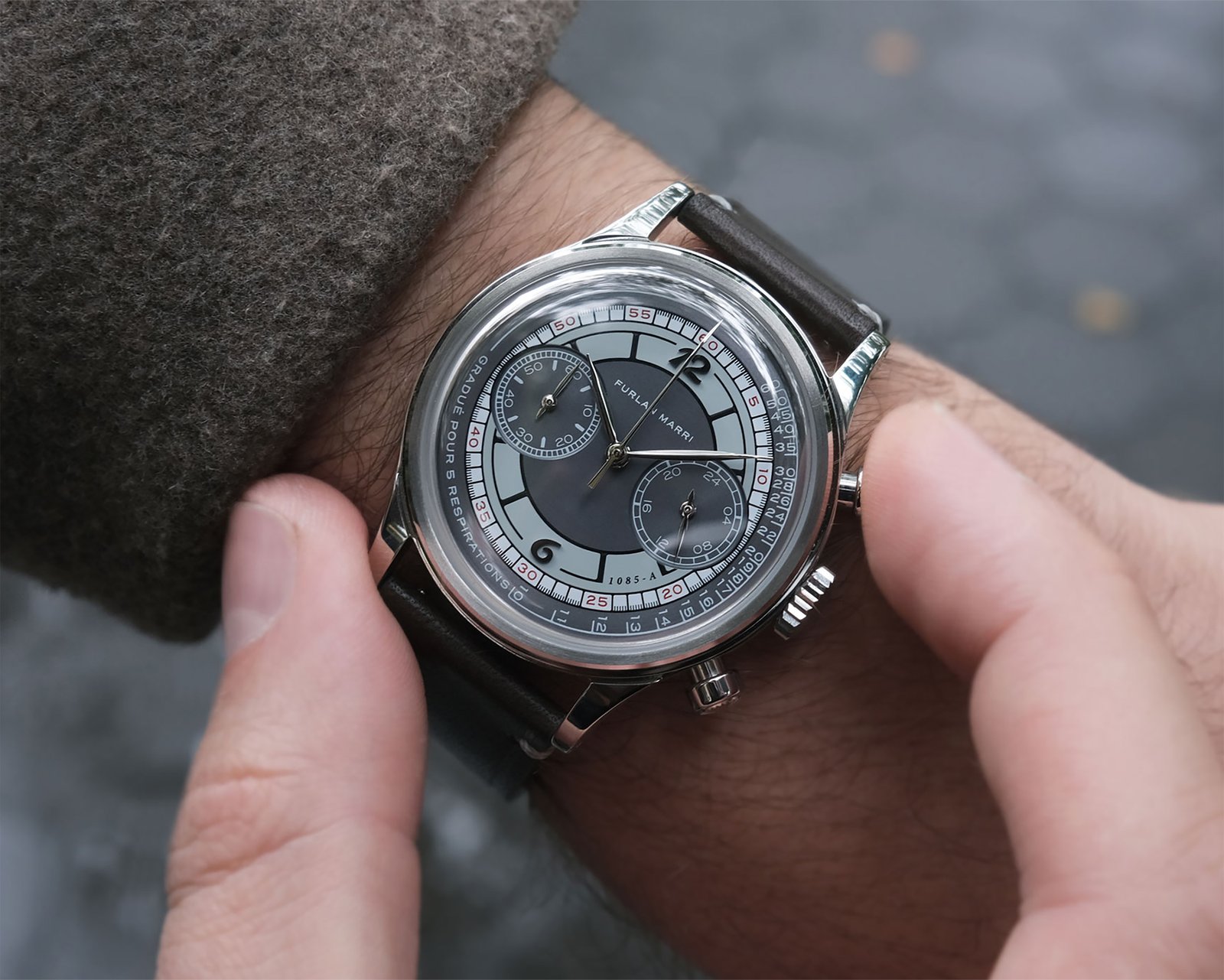
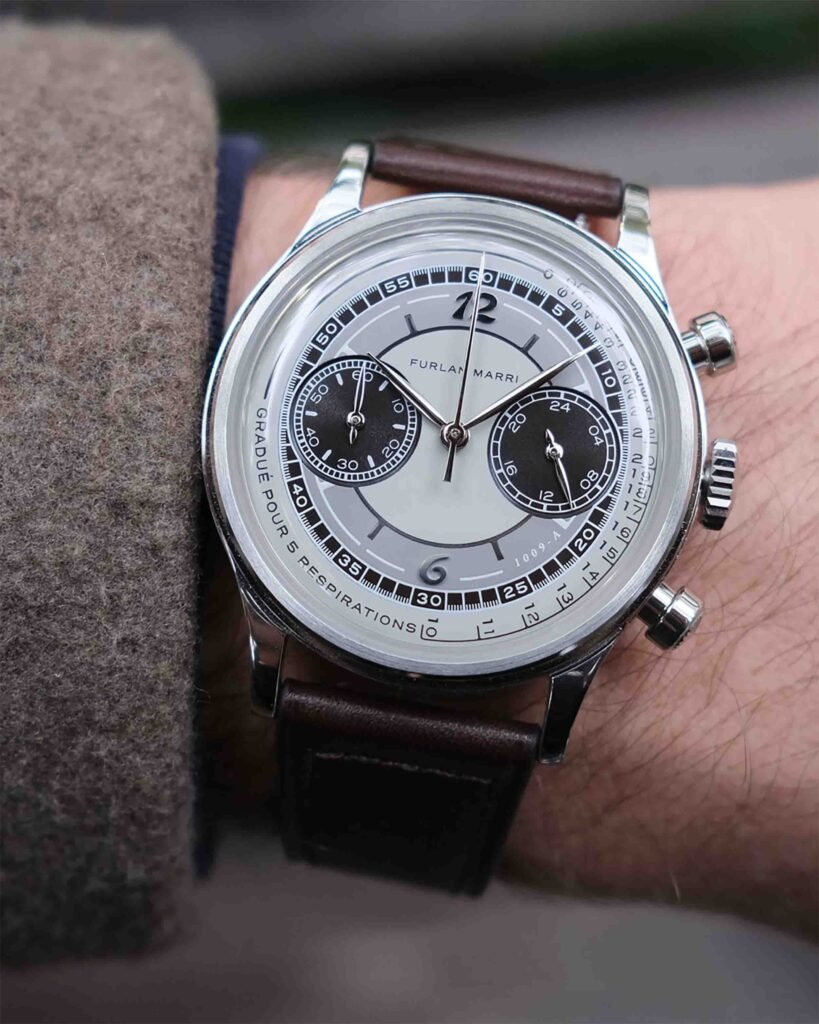
This chronograph features a pulsometer, a function chosen for its deep roots in watchmaking tradition. Historically used to measure heart rate based on a defined number of beats, the pulsometer is more than a decorative detail. It is an instrument inherited from another era, one that responded to genuine needs. Reinterpreted with a contemporary perspective, it reflects a time when every detail served a clear purpose, and when elegance went hand in hand with functionality.
The Collection
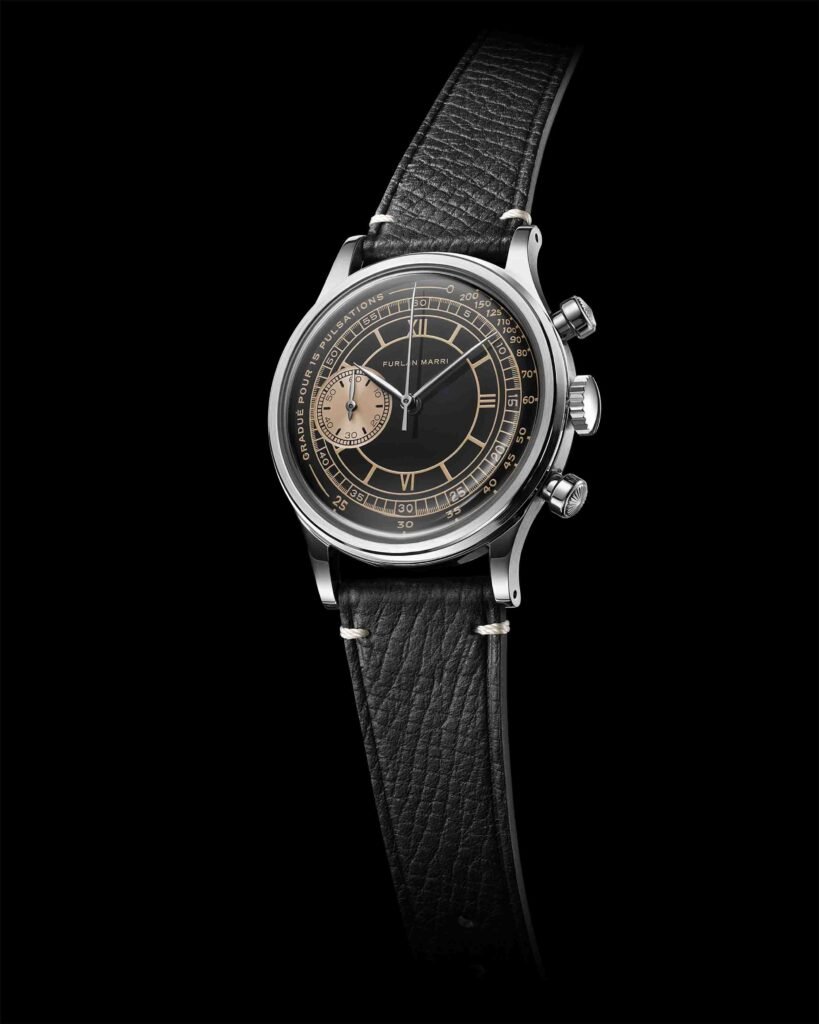
Nero Sabbia – A mix of black and sand tones, inspired by desert twilight. This chronograph features a pulsometer scale.
Castagna – Brown and taupe shades, recalling aged wood, and the understated charm of vintage interiors. This chronograph features an asthmometer scale.
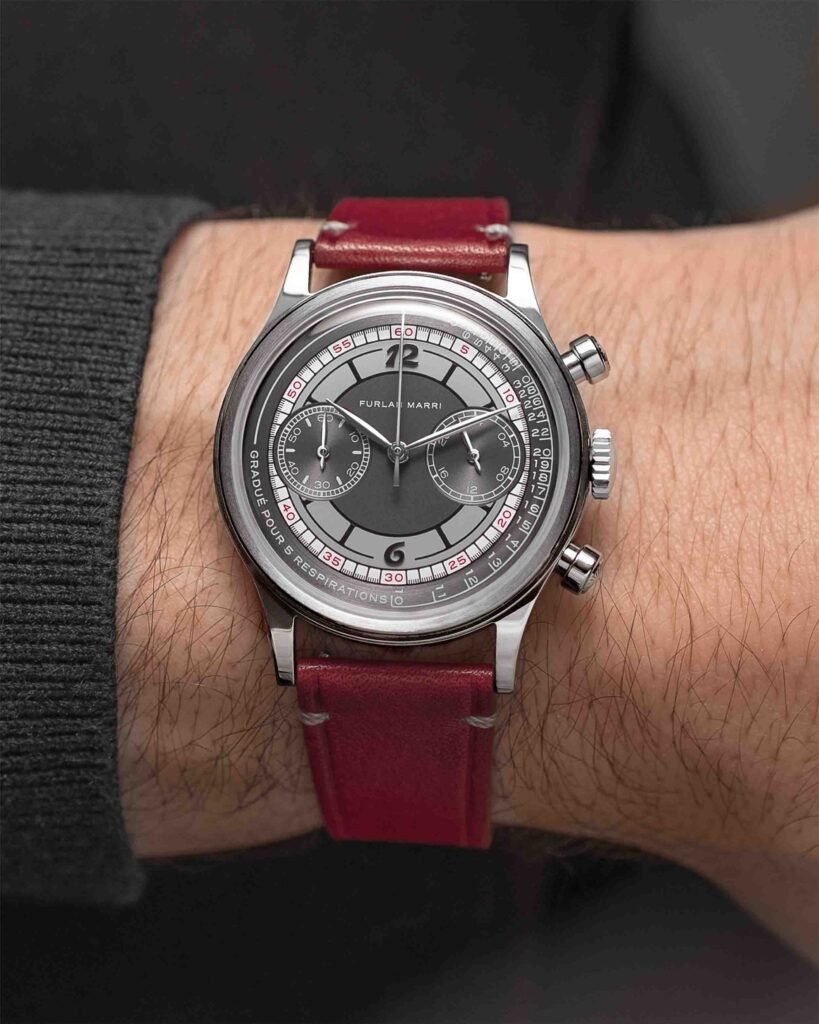
Rosso Grigio – Red and grey tones, blending vintage attitude with bold urban energy. This chronograph features an asthmometer scale.
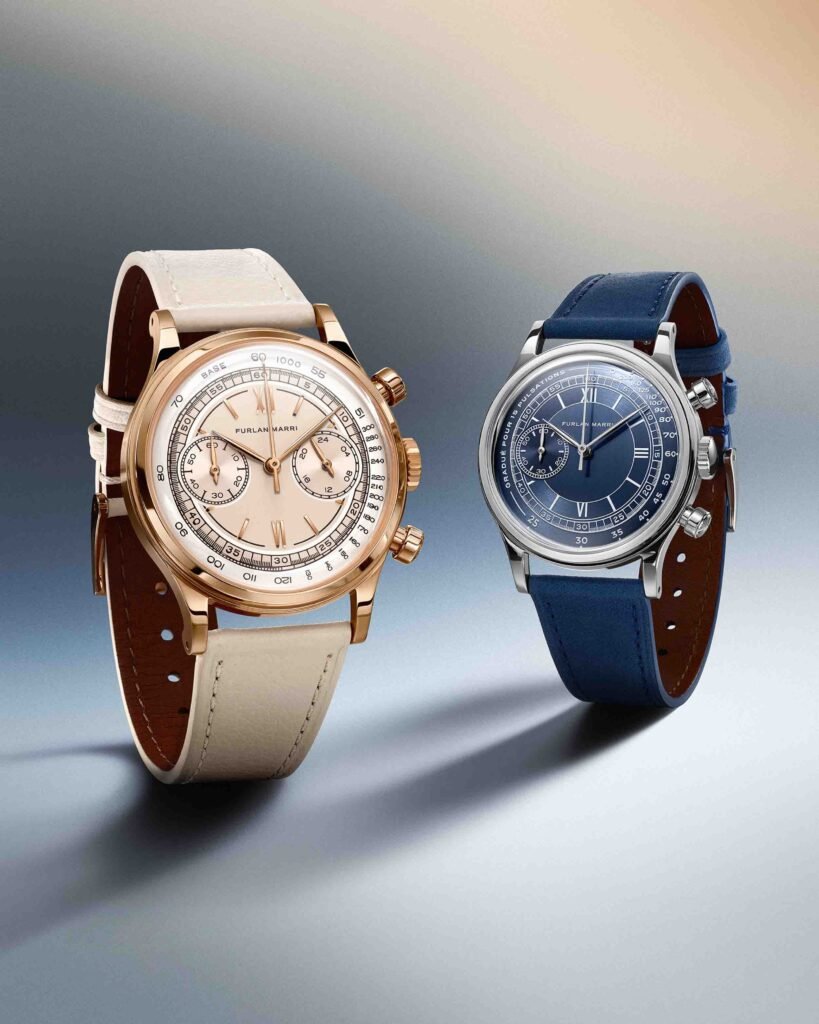
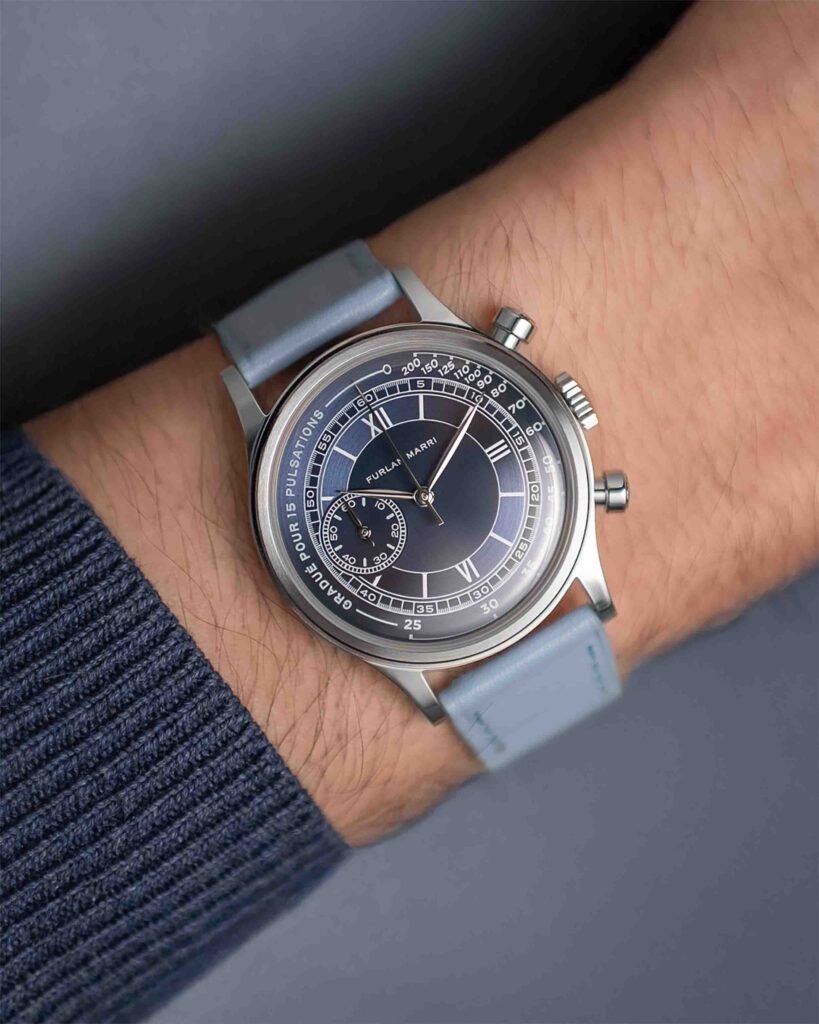
Ardesia Blu – Deep blue tones offer a sense of clarity and calm, inspired by endless horizons and the stillness of open water. This chronograph features a pulsometer scale.
Sabbia Rosa – Cream & champagne tones bring a soft luminosity to the wrist, evoking golden-hour and summer light. This chronograph features a tachymeter scale.
A Focus on Finishing
The level of finishing within the collection is usually associated with far more exclusive timepieces. The 38 mm case is crafted from 316L stainless steel, features a combination of perlage, polishing, satin brushing, and deep embossing. The decagonal caseback is deeply engraved, reinforcing the architectural character of the piece.
The dial follows a sandwich construction, adding genuine visual depth to its design. Applied polished Roman numerals, double-printed indications, and the domed outer ring enhance legibility while preserving the vintage-inspired aesthetic. Distinctive features also include domed and curved hands, completing the overall balance of the dial.
Further information
Furlan Marri – The Mechaquartz Permanent Collection